
There are detours on the Northumberland 250 that reward you with a great view, or a picturesque village, or a particularly good cup of coffee. And then there is the College Valley. This one rewards you with something else entirely: the faintly overwhelming smell of wild goat. Pull off the B6351 near Kirknewton, follow the single-track road south into the hills, and you enter one of the quietest and most overlooked corners of the entire route. The College Valley is a broad, green corridor running south into the Cheviots, framed by rolling moorland and threaded by the shallow College Burn. Buzzards circle. Willow warblers fill the riverbank with song. Brown hares bolt across the sheep-grazed fields. It is, even by Northumberland's high standards, a strikingly peaceful place. But the valley holds a surprise that most drivers passing through Kirknewton never discover.
Meet the Cheviot's Ancient Residents
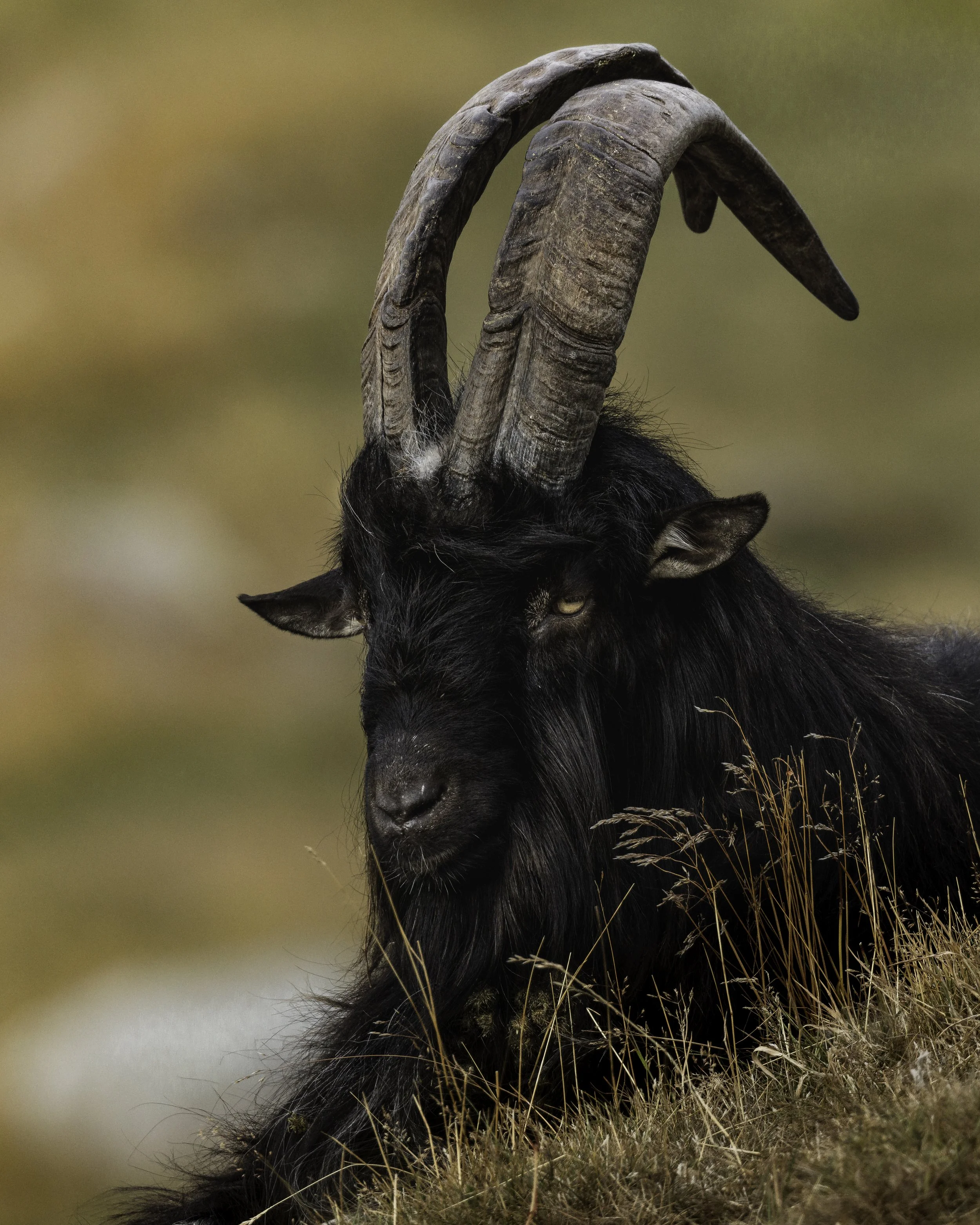
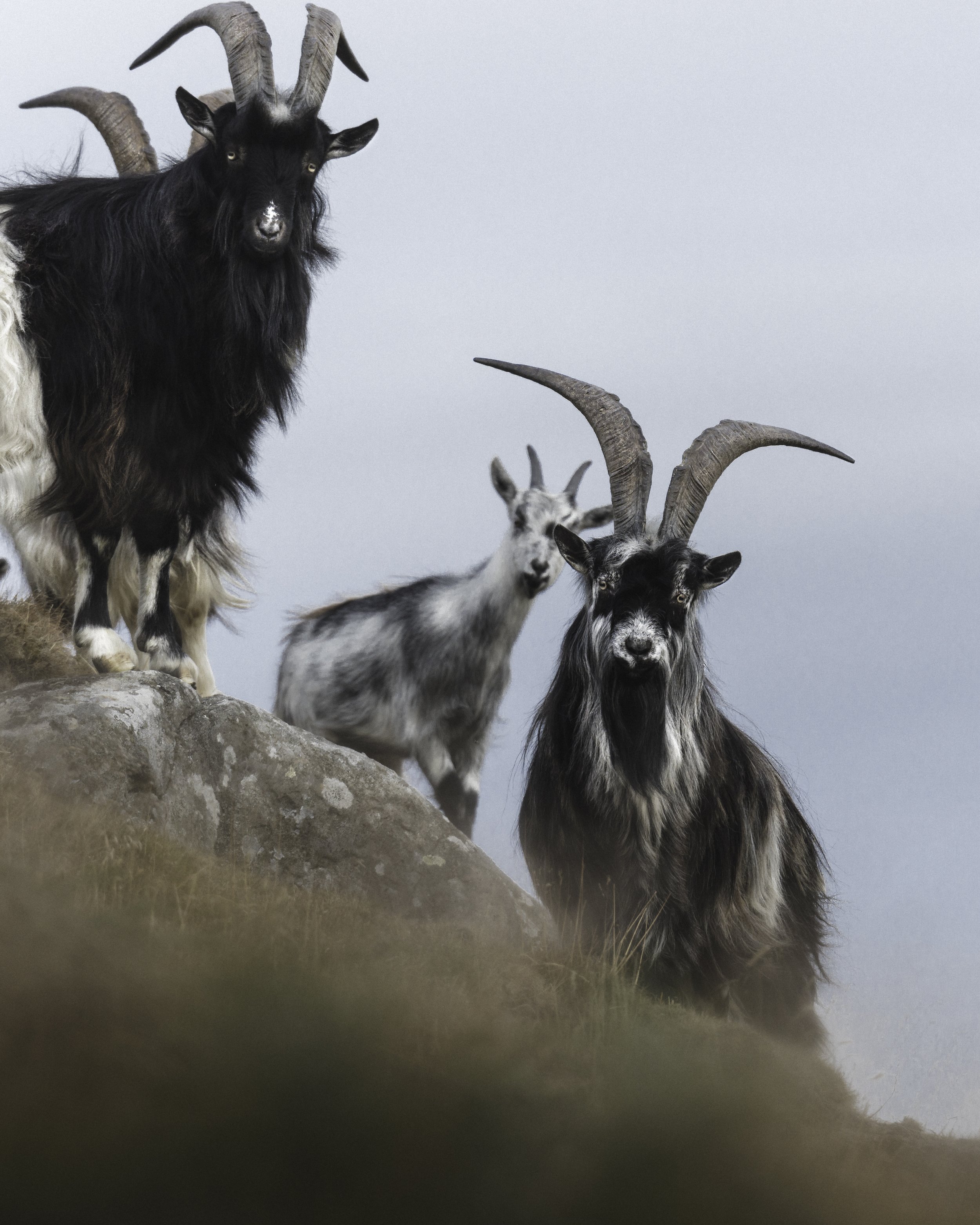
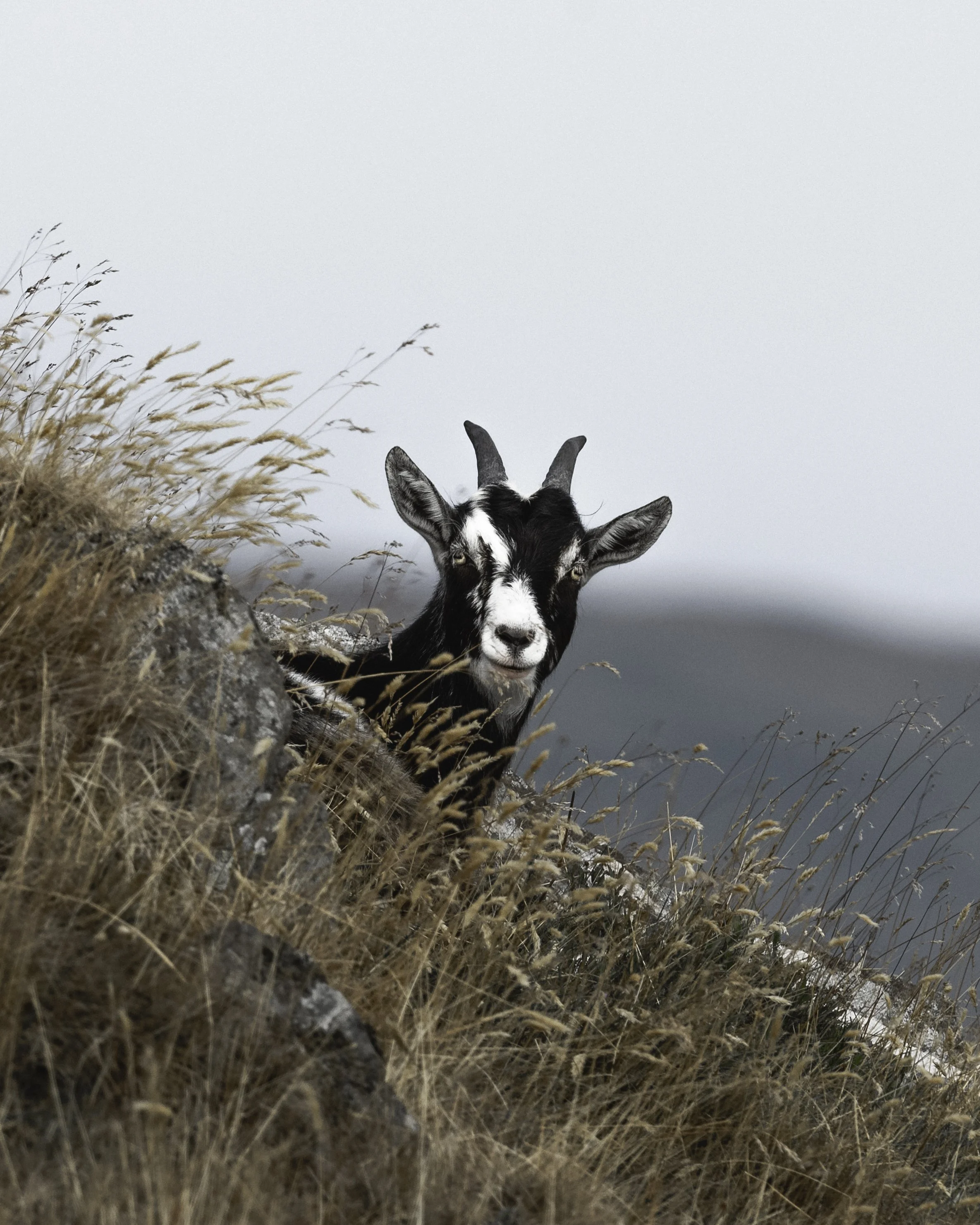
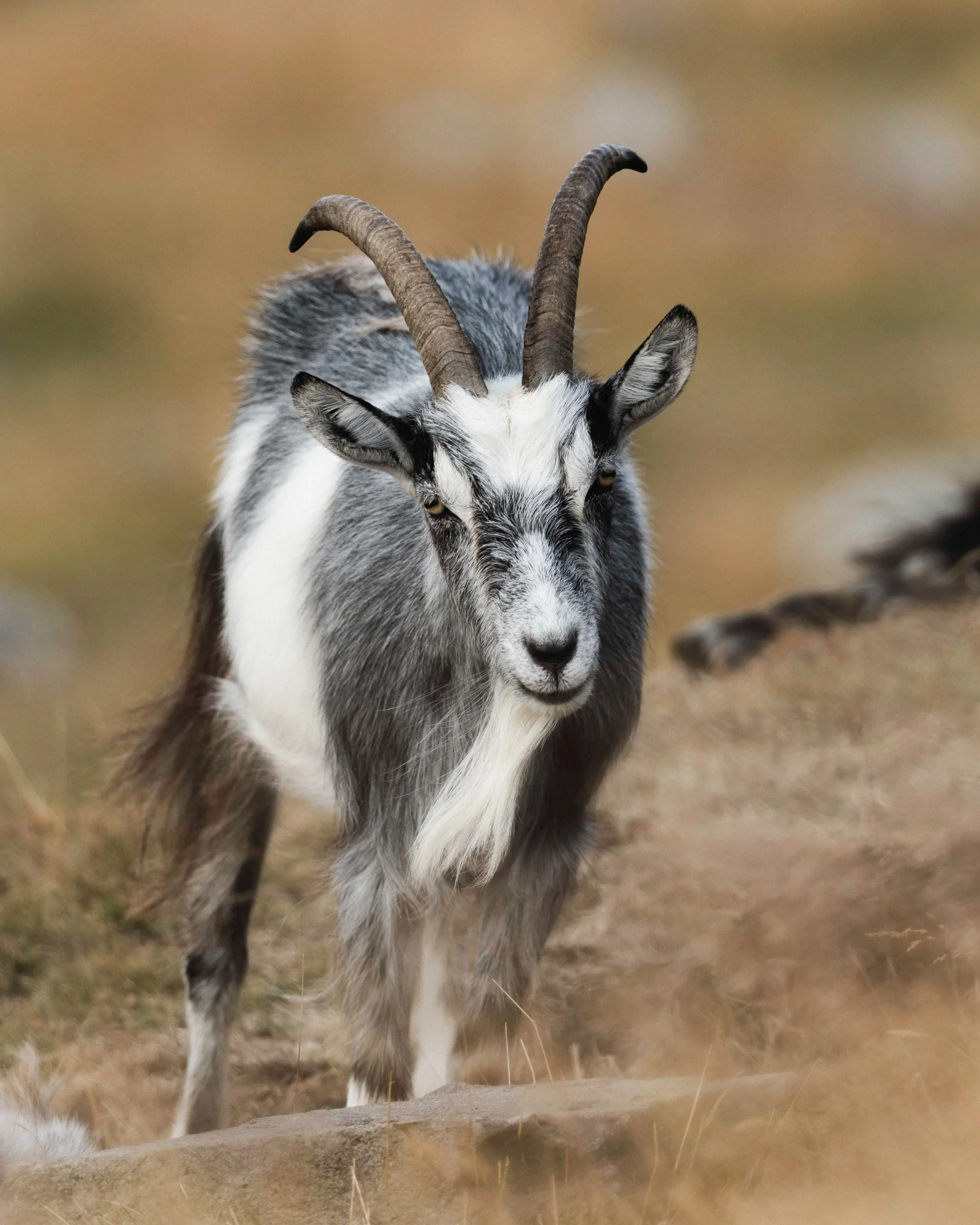
High on the hillsides above the valley floor, wild goats have roamed these lands since the Neolithic period. Believed to be among the purest surviving descendants of domestic herds introduced by early farmers some six thousand years ago, these animals have never been crossbred with modern breeds. They are, in every meaningful sense, living relics: a direct line to the people who first farmed this landscape millennia ago.
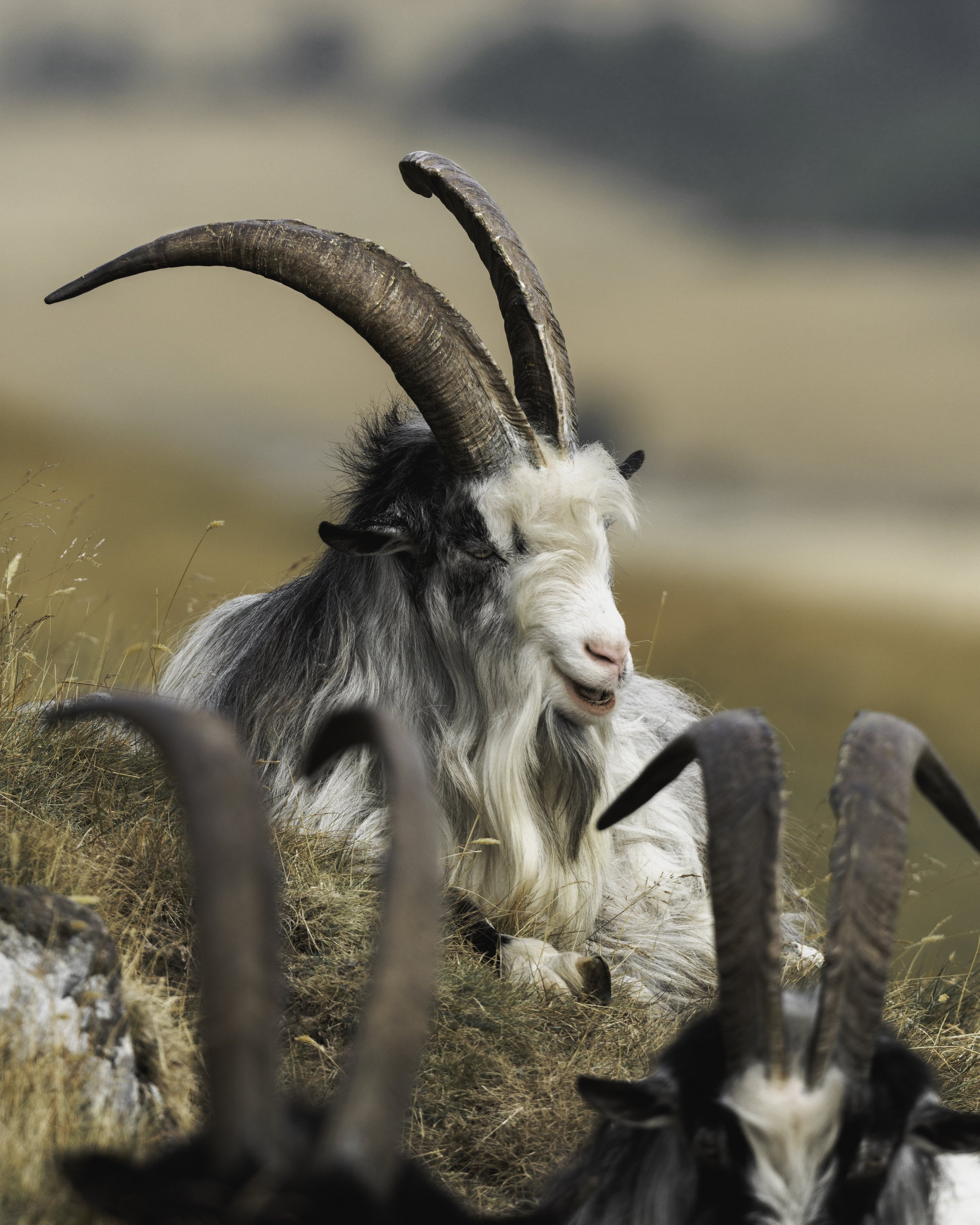
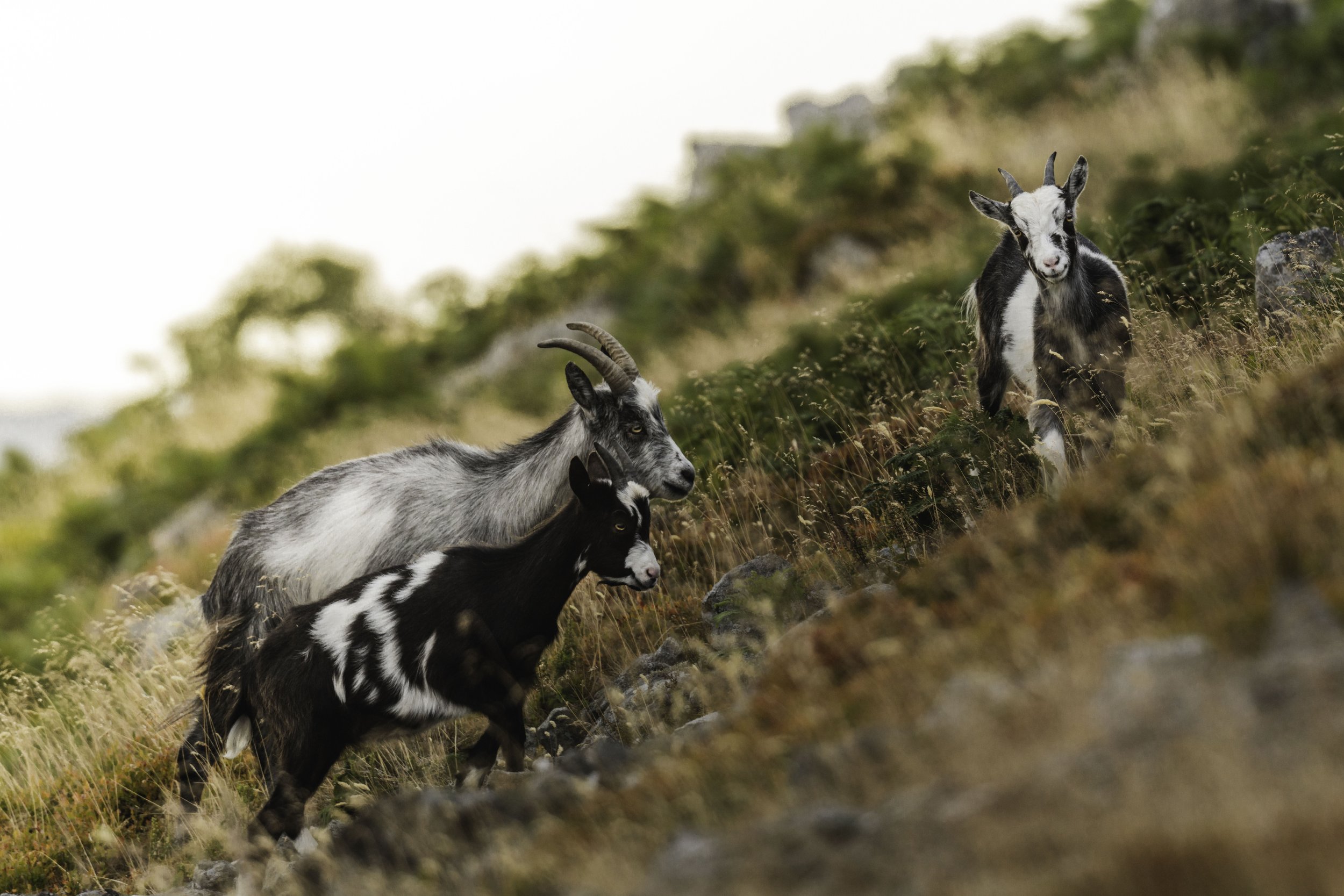
They are not the trim, compact creatures you might picture. The billy goats are shaggy and matted, built like something from a Norse saga, with powerful curving horns and long flowing beards. The nannies are smaller, shorter-coated, but equally well-equipped for a life spent navigating steep scree and exposed moorland. Wide-ranging in colour, from deep black to pale grey to russet brown, they carry a slightly ungoverned quality that feels entirely appropriate for animals living entirely on their own terms.
Their scent, it should be said, announces them before you see them. Somewhere between goat's cheese and a forgotten cloakroom, it is a powerful and strangely compelling smell. One you can, with time, get used to.
Where to Find Them
The College Valley is the most accessible starting point for anyone hoping to spend time with the goats. A hillside ascent near Easter Tor, though steep and rocky in places, puts you into their territory. Patience matters more than fitness here. Approach quietly, use the stands of bracken as cover, and give the herd time to grow accustomed to your presence. Their golden eyes will track you steadily, but the indifference is genuine. These animals have been watching curious humans wander into their hills for a very long time.
Beyond the College Valley, the goats range widely across the northern Cheviots. Chief strongholds include Yeavering Bell, Hethpool, Newton Tors, and Windy Gyle, as well as Kielderhead further west. A herd once occupied Whickhope Linn near Kielder Water but was lost entirely during the catastrophic winter of 1946-47, which gives some sense of what it takes to overcome animals this hardy.
The story of their origins remains pleasingly murky. Some local accounts trace them to goats once kept by the monks of Holy Island, released to the hills when the chapel near Memmerkirk was abandoned. Others suggest they are descended from livestock kept by early settlers in this region, set loose when more productive breeds became available. Both stories feel right for a Northumberland that has always been shaped by lives lived close to the land.
Ad Gefrin: A Gate Worth Stopping For
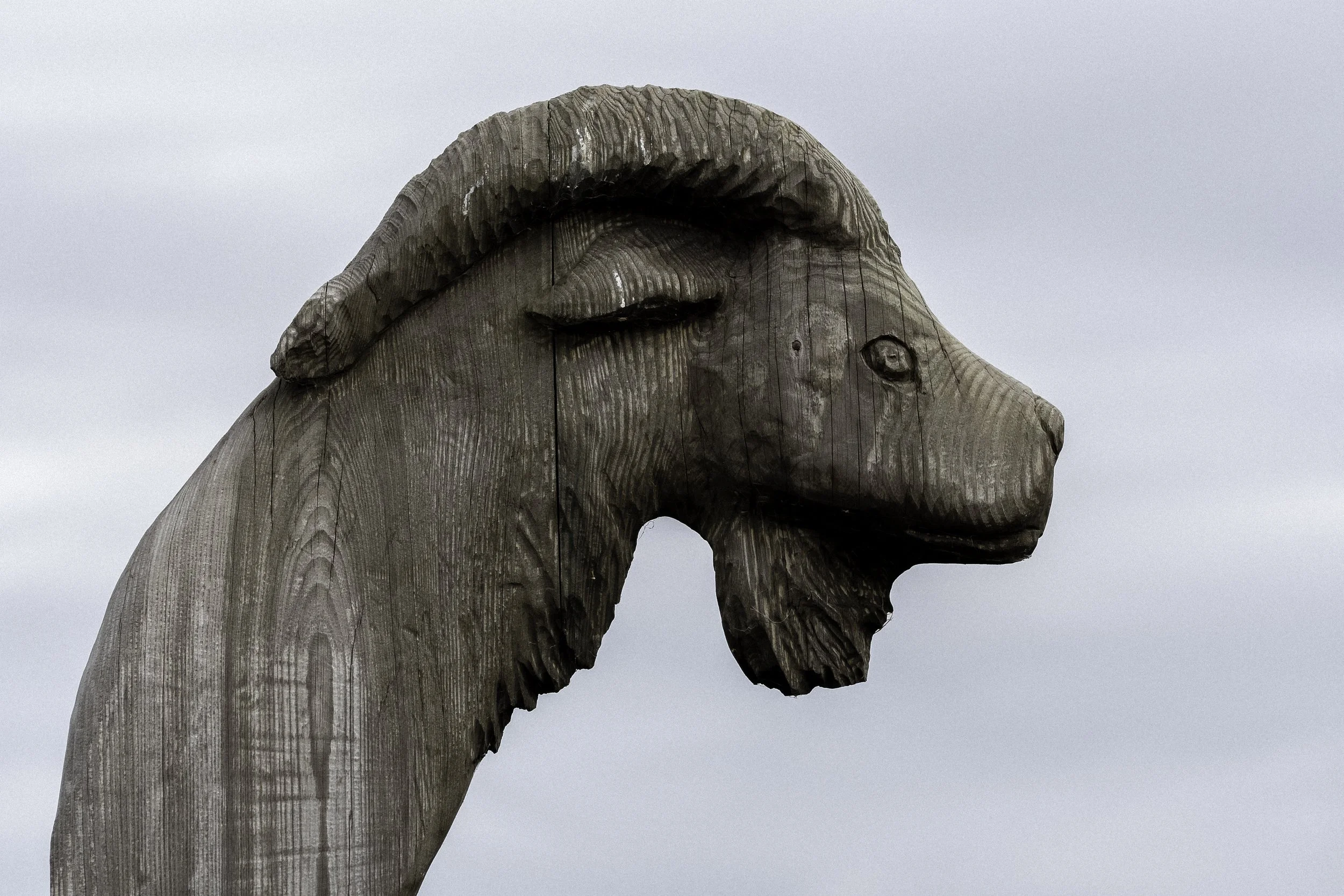
Just outside Kirknewton, before you turn south into the valley, look for Ad Gefrin. The name itself, from the old Brittonic, translates as the Hill of Goats: a reminder that these animals have been central to this landscape's identity for far longer than any road or route. The site of a significant early medieval Anglo-Saxon settlement, it is now marked at its roadside entrance by a carved wooden gate post bearing the emblematic form of the wild goat. A small detail, easy to miss, but one that rewards those who stop.
Plan Your Visit
The College Valley road is a no-through route, so allow time to explore at your own pace rather than passing through. Early mornings and late afternoons tend to be best for wildlife, and the valley is at its finest in late spring and summer when the hillsides are green and the bracken stands tall. Wear sturdy footwear if you intend to ascend the steeper ground.
It is worth knowing that wild Cheviot goats carry no formal protection status. Should they cause damage to property or land, they can legally be removed at a landowner's discretion. It is a precarious position for an animal of such genetic rarity and historical significance, and it lends an extra weight to time spent in their company. For now, though, they hold the hills. And if you follow the Northumberland 250 north, into the borderlands, and take the turn towards the College Valley as the light softens in the late afternoon, there is a good chance you will find them there: horns against the skyline, golden eyes steady, thoroughly unimpressed by your arrival. Exactly as they should be.
The College Valley detour branches from the N250 near Kirknewton, in the Borderlands section of the route. Allow at least half a day if you plan to walk the hillside. The valley road requires a permit for vehicles beyond the ford at Hethpool.