
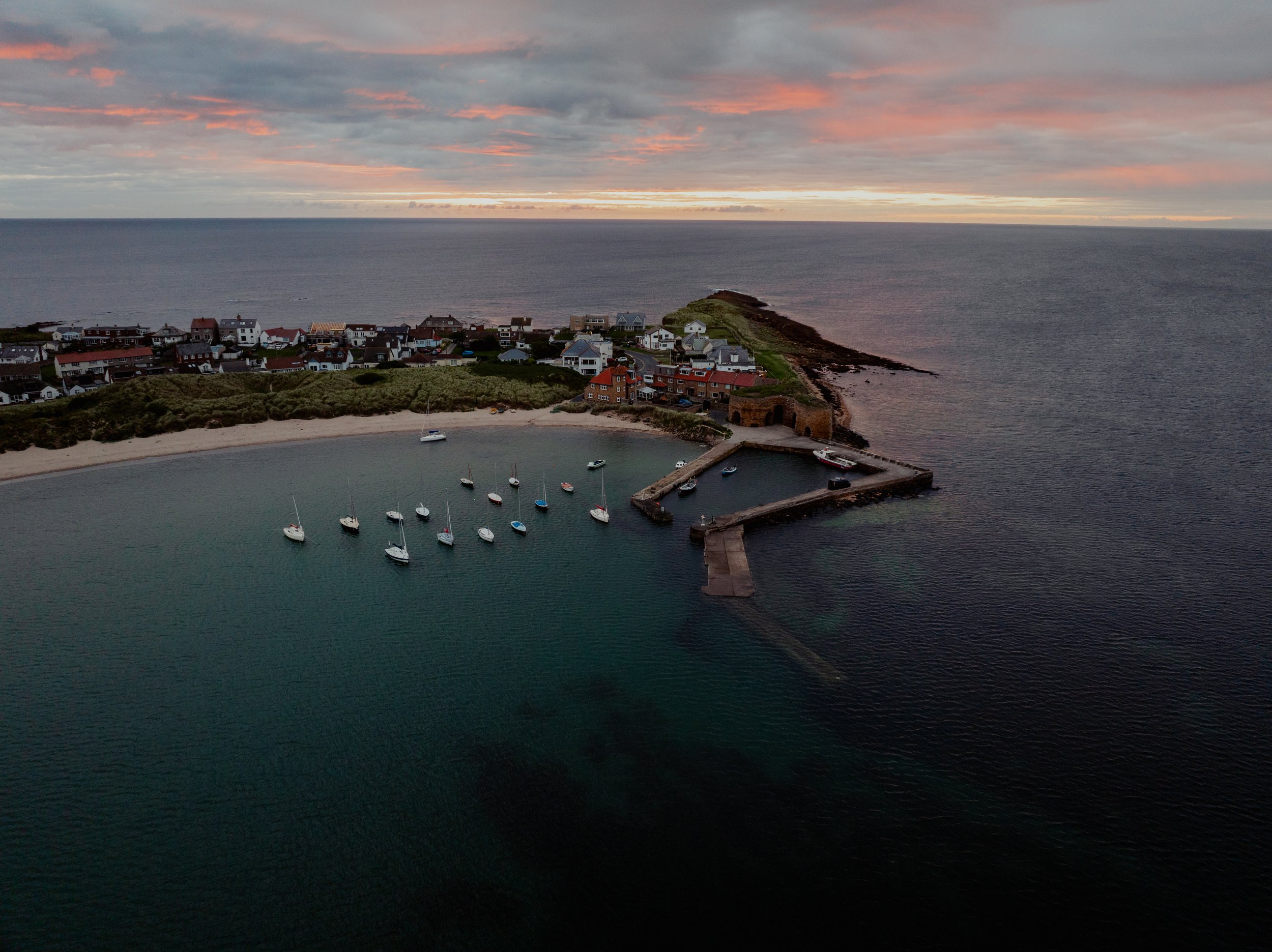
There is something quietly unusual about Beadnell. Split in two, connected by a thread of coastal cottages, it sits at the northern tip of a sweeping horseshoe bay that curves for two miles before it runs out of ambition. Most visitors pass through without stopping. Those who do tend not to forget it.
The village has deep roots along this stretch of Northumberland coast, with evidence of settlement stretching back to the early medieval period. Once known locally as Beadlin, its name derives from the Anglo-Saxon Bede's Hall. By the Middle Ages it had grown into a small fishing community tied closely to the sea, and in later centuries it developed into a centre for lime burning and quarrying, industries that shaped not just its economy, but its physical form. At first glance, Beadnell appears to exist in two distinct parts. The main village clusters around the 18th-century St Ebba's Church, south of the B1340 where the road bends inland. A string of cottages then links it to the separate hamlet of Beadnell Harbour, positioned at the northern tip of Beadnell Bay. It is here that the village reveals its most surprising characteristic. The harbour is said to be the only one on England's east coast to face west, a geographical quirk that gives it a quality of light quite unlike anywhere nearby, and a shelter from the North Sea that must have made it highly prized.
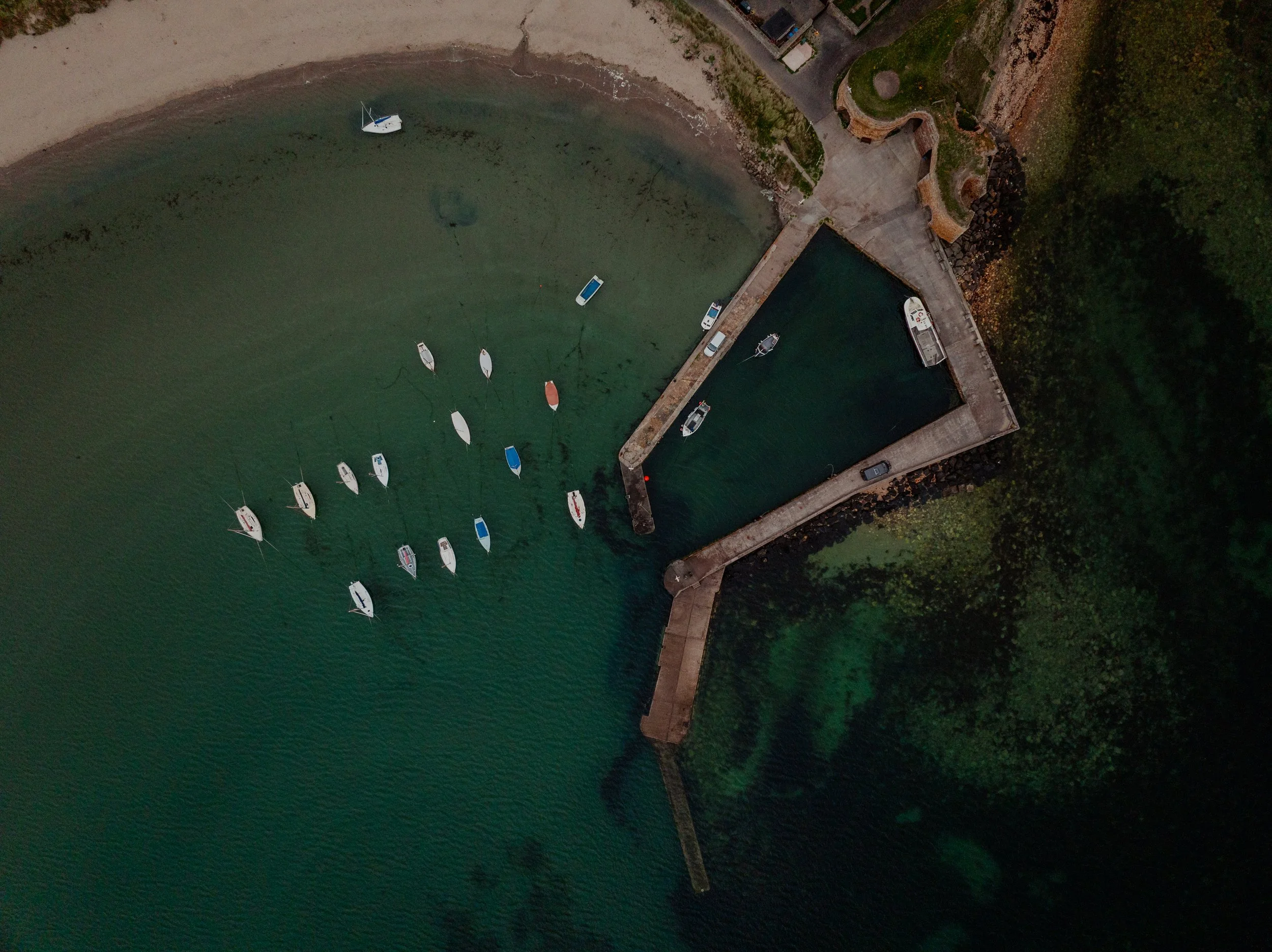
A clue to its industrial past lies in the imposing limekilns that dominate the inland end of the harbour. The first was built in November 1798, designed to produce up to a thousand cartloads of lime annually, shipped from the purpose-built harbour to destinations along the east coast of England and into southern Scotland. The venture proved successful enough that two further kilns were added, creating the distinctive triple structure that survives today.
Lime production ceased by the mid-1820s, but the kilns found a second life curing herrings before eventually falling quiet altogether. Today they are Grade II listed, preserved as striking reminders of Beadnell's industrial heyday and forming a dramatic stone backdrop to a harbour that has returned to quieter pursuits. Three boats currently operate from the quayside, landing mainly crab and lobster, with sea trout and salmon brought in during summer. Much of the catch is sold locally, at Swallowfish in Seahouses and Robson's in Craster, keeping the seafood firmly within the communities that have always depended on this coastline. Beadnell will not shout for your attention. But turn off the B1340, follow the cottages north, and you will find a harbour facing the wrong way by every geographical logic, and all the better for it.
Finding Beadnell
Beadnell sits on the Northumberland coast approximately 4 miles south-east of Bamburgh and 2 miles south-east of Seahouses, just off the B1340. The village falls within the Northumberland Coast Area of Outstanding Natural Beauty, and its two-mile bay is home to nationally important seabird colonies, including the largest mainland colony of Arctic tern in the United Kingdom.
Parking is available at Station Road car park at the north end of Beadnell Bay, managed by Northumberland County Council and operated on a pay and display basis. The postcode for navigation is NE67 5BJ.
Beadnell sits within the Coast section of the Northumberland 250 route, making it a natural stop between Seahouses to the north and Craster to the south.