
Your guide to Northumberland’s best waterfalls
Northumberland doesn't shout about its waterfalls. There are no visitor centres at the start of the walks to reach them, no queues for the viewpoint, no gift shops selling framed prints of the plunge pool. What there is, tucked into river gorges, deep valleys and the folds of the Cheviots, is some of the most quietly spectacular falling water in England and the satisfaction of having to earn it. Whether you're wild swimming, wildlife-watching or simply standing in the spray with your boots soaked and your mood improved, here are the waterfalls worth going out of your way for on the Northumberland 250.
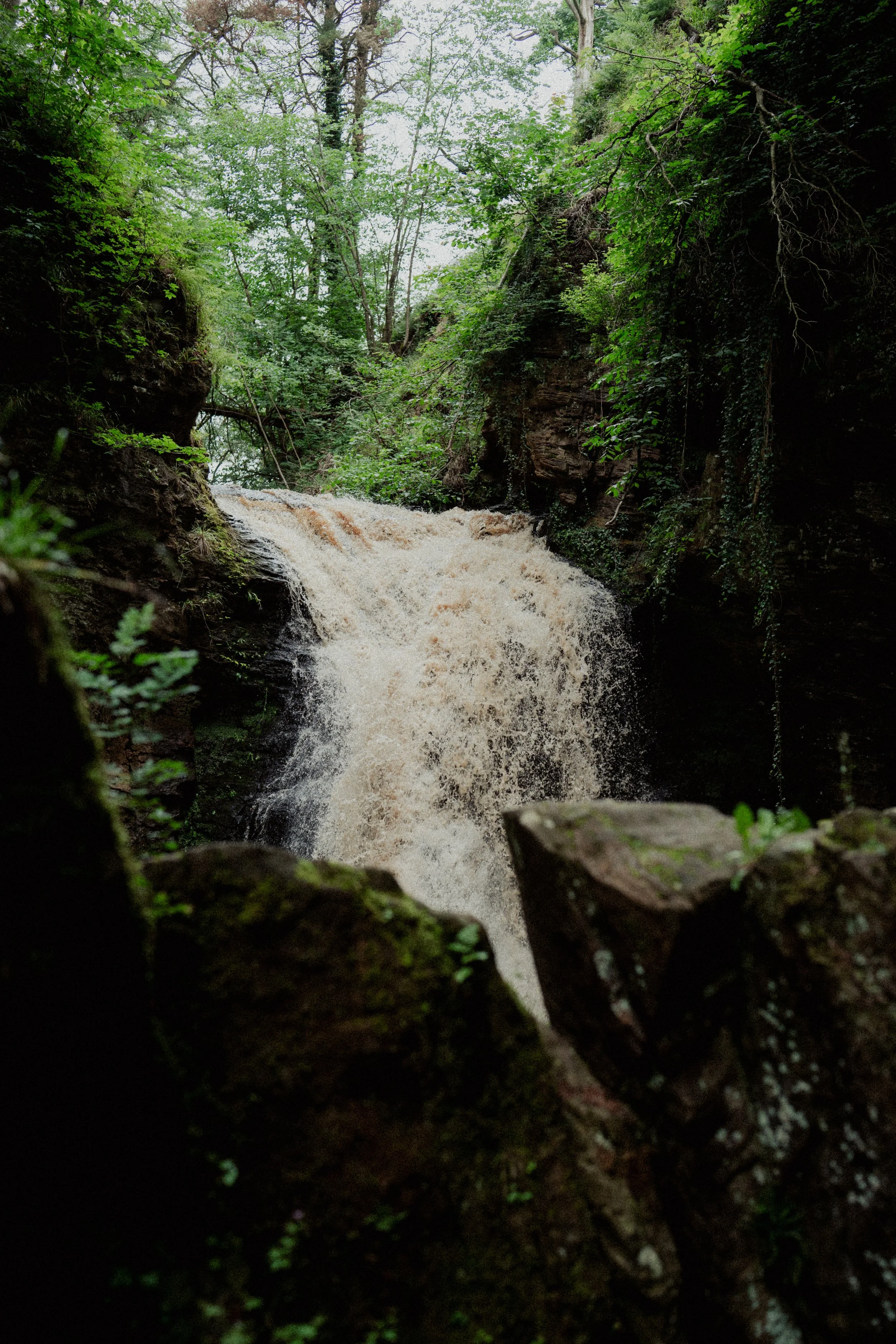
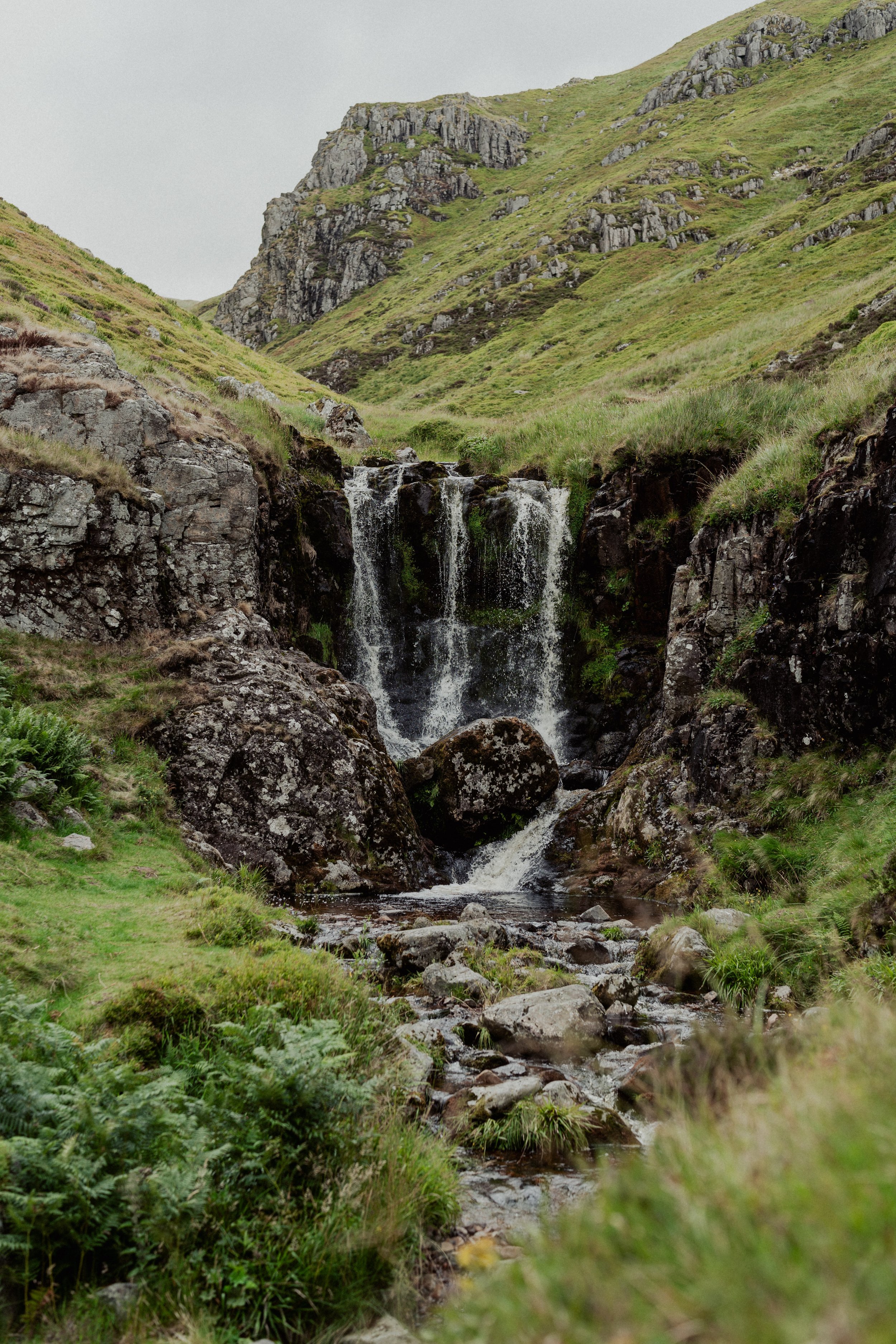
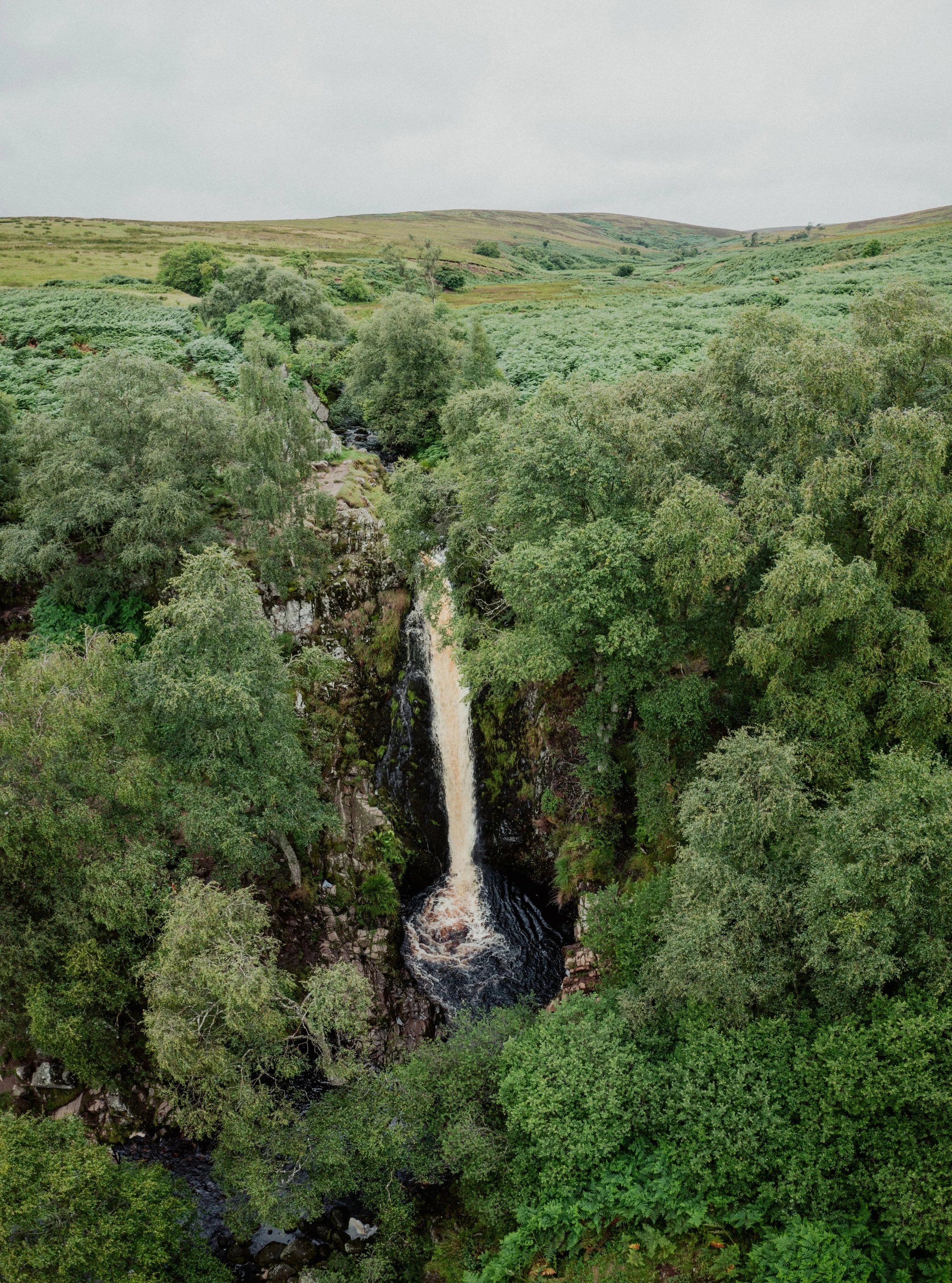
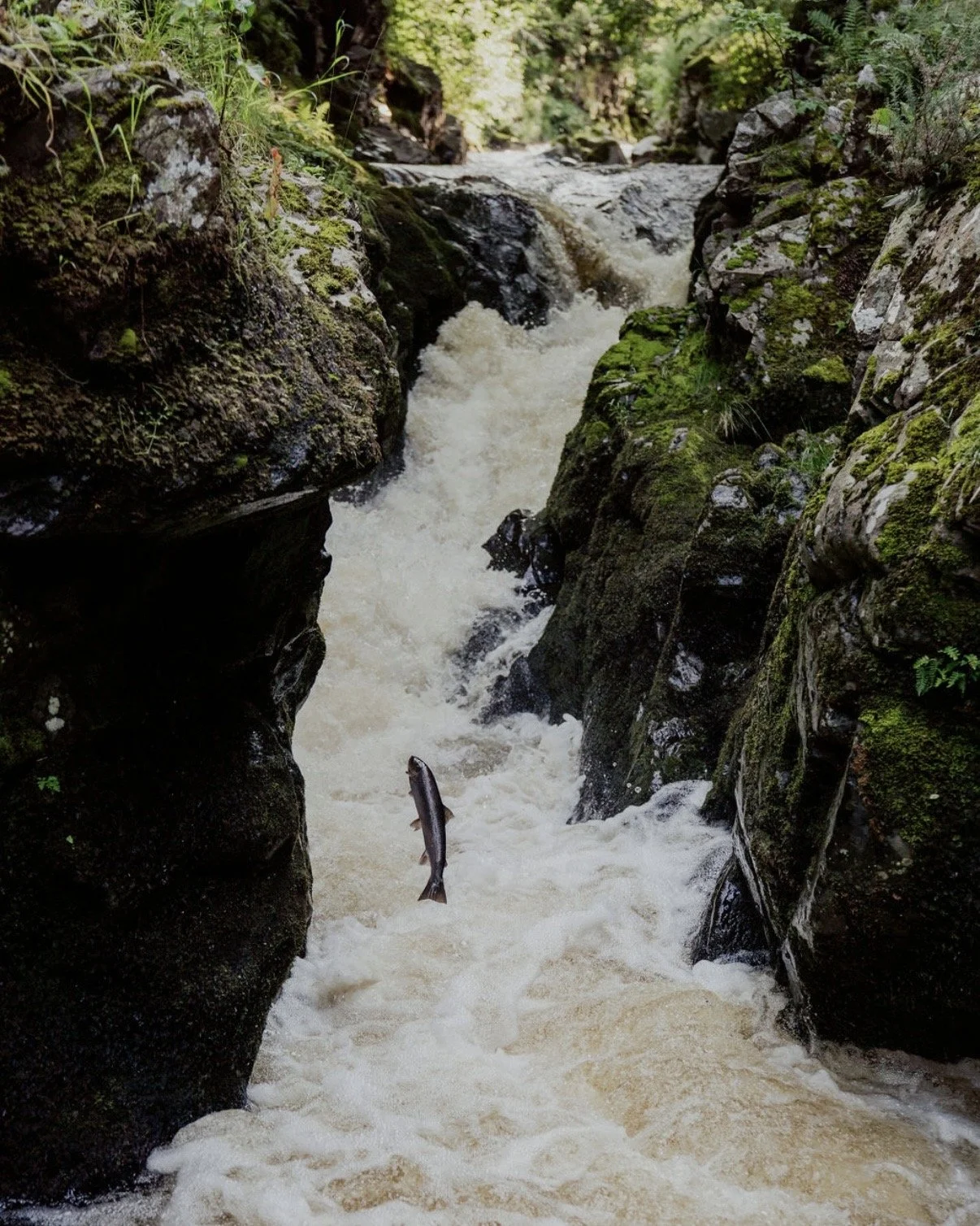
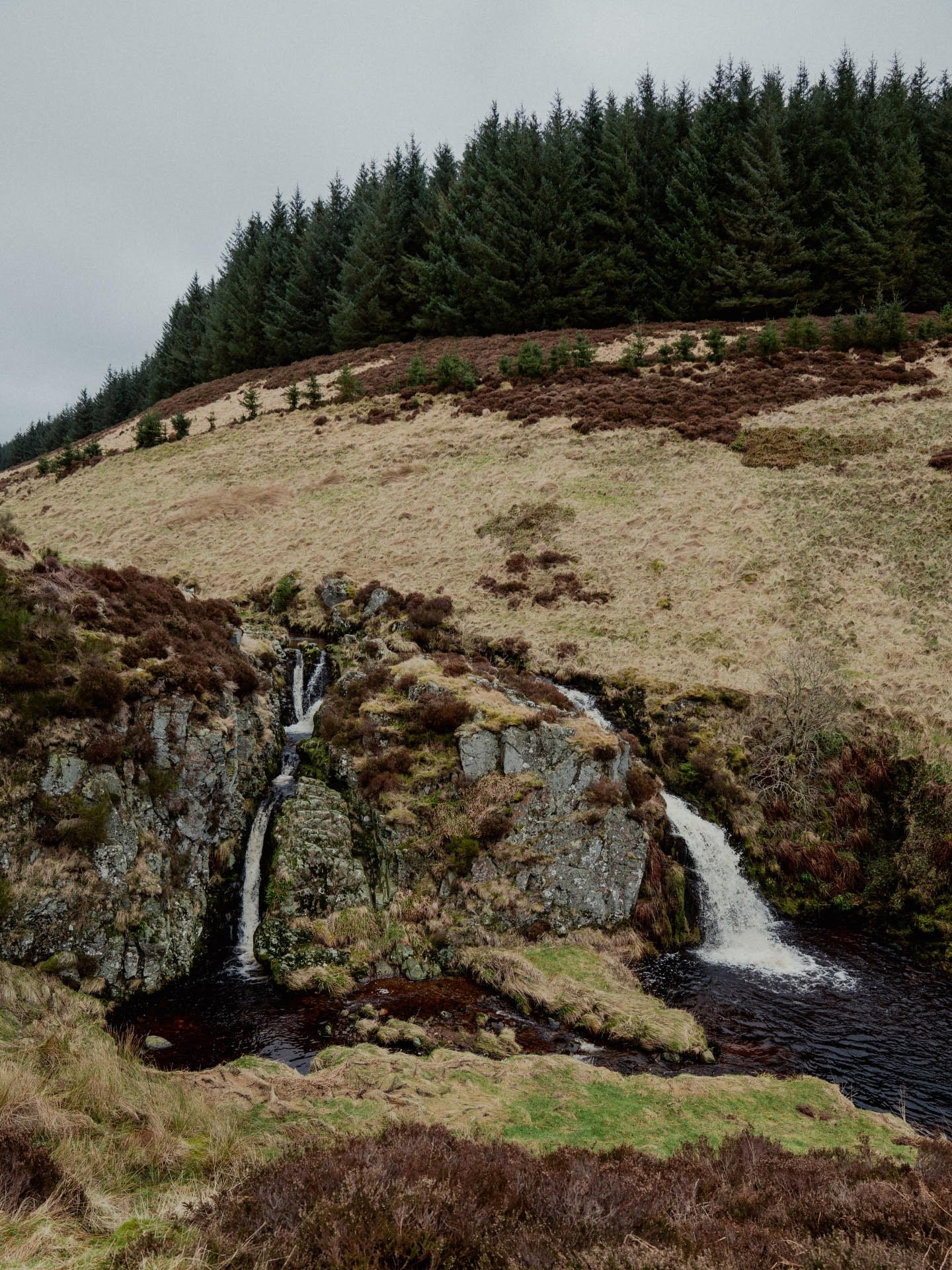
The county's waterfalls are spread across wildly different landscapes. Burns tumble off the high Cheviots through ancient gorges thick with fern and lichen. Sandstone crags frame the rivers of the west, within walking distance of Roman history. In the Dark Skies country, forest tracks lead to hidden cascades where the only sounds are water and wind. These aren't the kind of waterfalls you'll find on a roadside brown sign. You find them on OS maps, or by following a path that looks like it might lead somewhere interesting. More often than not, it does. Whether you're wild swimming, wildlife-watching or simply standing in the spray with your boots soaked and your mood improved, here are the waterfalls worth going out of your way for on the Northumberland 250.
Hareshaw Linn
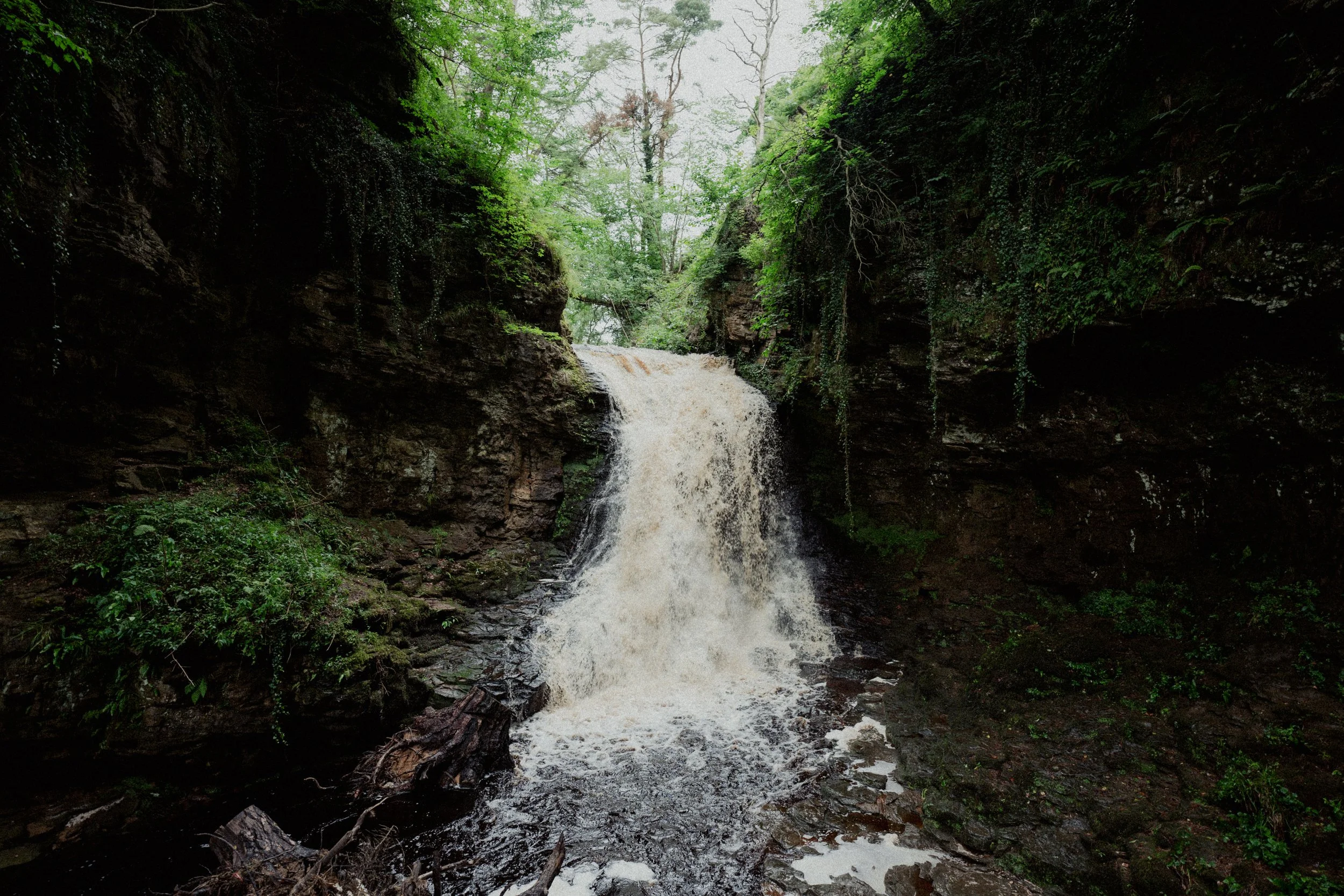
The walk to Hareshaw Linn is half the point. From the centre of Bellingham, a well-signposted path leads through ancient oak, hazel, elm and ash woodland, crossing bridges and climbing gently alongside the Hareshaw Burn before the gorge tightens and the falls appear without warning.
The waterfall tumbles into a rocky pool at the head of the gorge, elegant rather than thunderous, and all the better for it. This is a Site of Special Scientific Interest, designated for rare ferns and lichen, and the woodland corridor is exceptional for wildlife: great spotted woodpeckers, redstarts, dippers, badgers and Daubenton's bats all call it home.
It's an easy walk, less than a mile each way on a solid stone path, making it ideal for families, though grippy footwear is essential in wet conditions. Go after heavy rain for the most impressive display, and go early if you're visiting in peak season; the car park fills quickly.
Getting there: Follow signs from Bellingham town centre. NE48 2HH. Just under a mile each way; car park on the edge of town.
Crammel Linn
Few waterfalls in Northumberland carry quite this combination of drama and remoteness. The River Irthing, which forms the border between Northumberland and Cumbria, cuts through a deep sandstone gorge, and at Crammel Linn it drops 7.6 metres in a spectacular double fall, the flow splitting around a rocky outcrop before reuniting in the plunge pool below.
The walk from Gilsland is around two miles each way along the river, passing the so-called Popping Stone, where Sir Walter Scott allegedly proposed to his wife. It can be muddy underfoot and the descent to the falls is steep and slippery in wet weather.
Getting there: Start from Gilsland village, CA8 7DB. Follow the River Irthing north on the marked footpath. Around 4 miles round trip.
Hen Hole
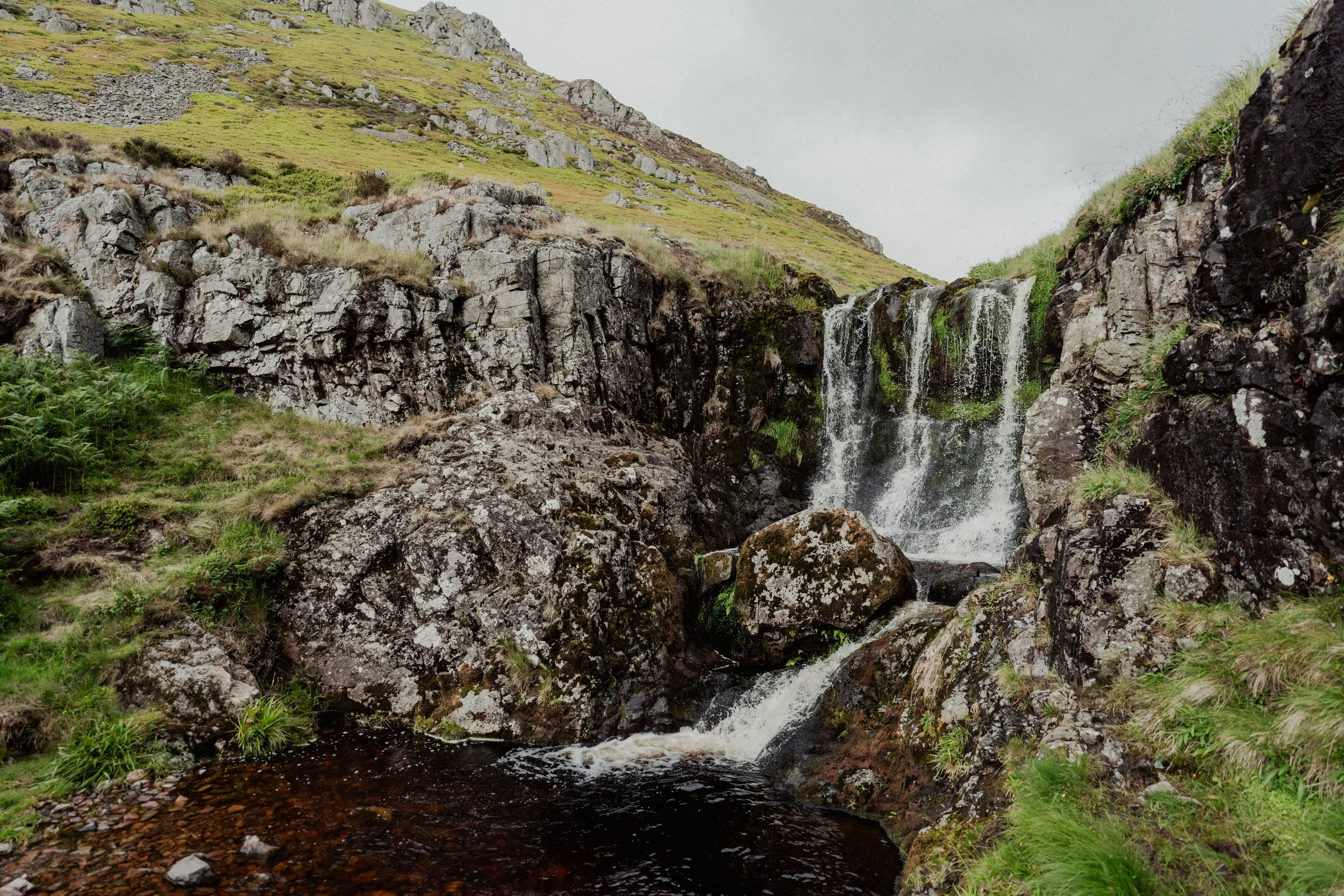
Hen Hole is a dramatic gorge in the Cheviots, close to the summit of The Cheviot itself, where the College Burn tumbles through a series of cascades and waterfalls in a landscape that feels genuinely otherworldly. Ancient rock formations burst from the valley sides, the burn zigzags between boulders, and the centrepiece, the Three Sisters waterfall, splits into three separate falls before dropping into a pool dominated by a precariously balanced square boulder.
Getting here requires commitment. It's a serious hill walk into remote terrain, and navigation skills are useful in poor visibility. But for those willing to make the effort, Hen Hole is arguably the most spectacular gorge in the entire county.
Getting there: Approach from Hethpool via College Valley. Limited vehicle access beyond Hethpool; permit required. NE71 6TX. Full day recommended.
Hinhope Linn
On the edge of Kielder Forest, near the historic Catcleugh Reservoir, Hindhope Linn offers one of the most accessible waterfall experiences in the county. A 1.25-mile signposted trail through dense woodland of Scots Pine, larch and birch leads to the falls, with smaller cascades appearing along the route to build anticipation before the main event.
The waterfall drops into a narrow, rocky gorge, the water darkened by the peat of the surrounding moorland and framed on both sides by mossy, fern-covered banks. It's an intimate scene rather than a grand one, the kind of spot where you feel compelled to stop, sit and say nothing for a while.
Getting there: Hindhope Linn car park off the A68 near Rochester, NE19 1TH. Roughly 1.25 miles to the falls; well-signposted throughout.
Davidson’s Linn
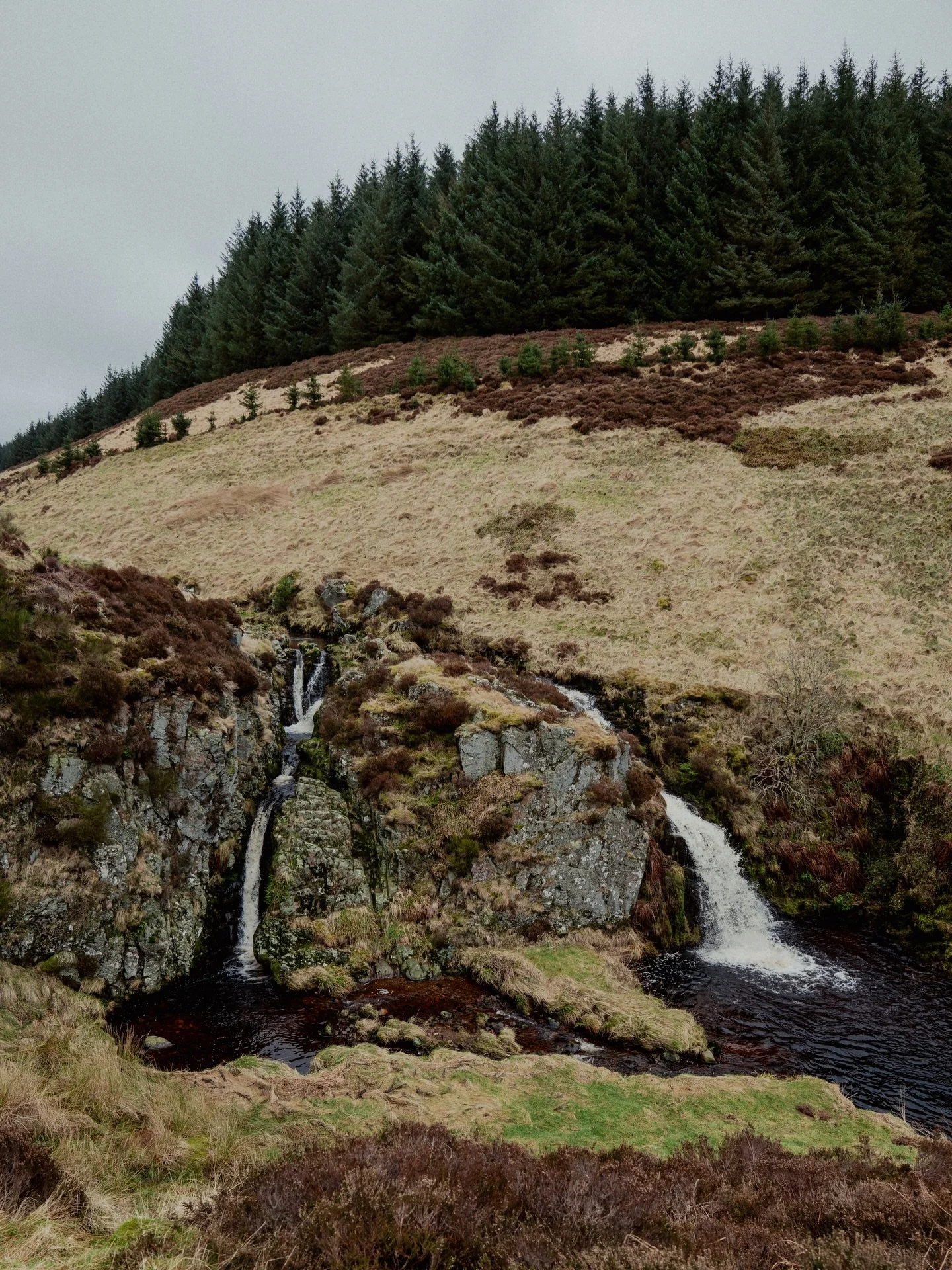
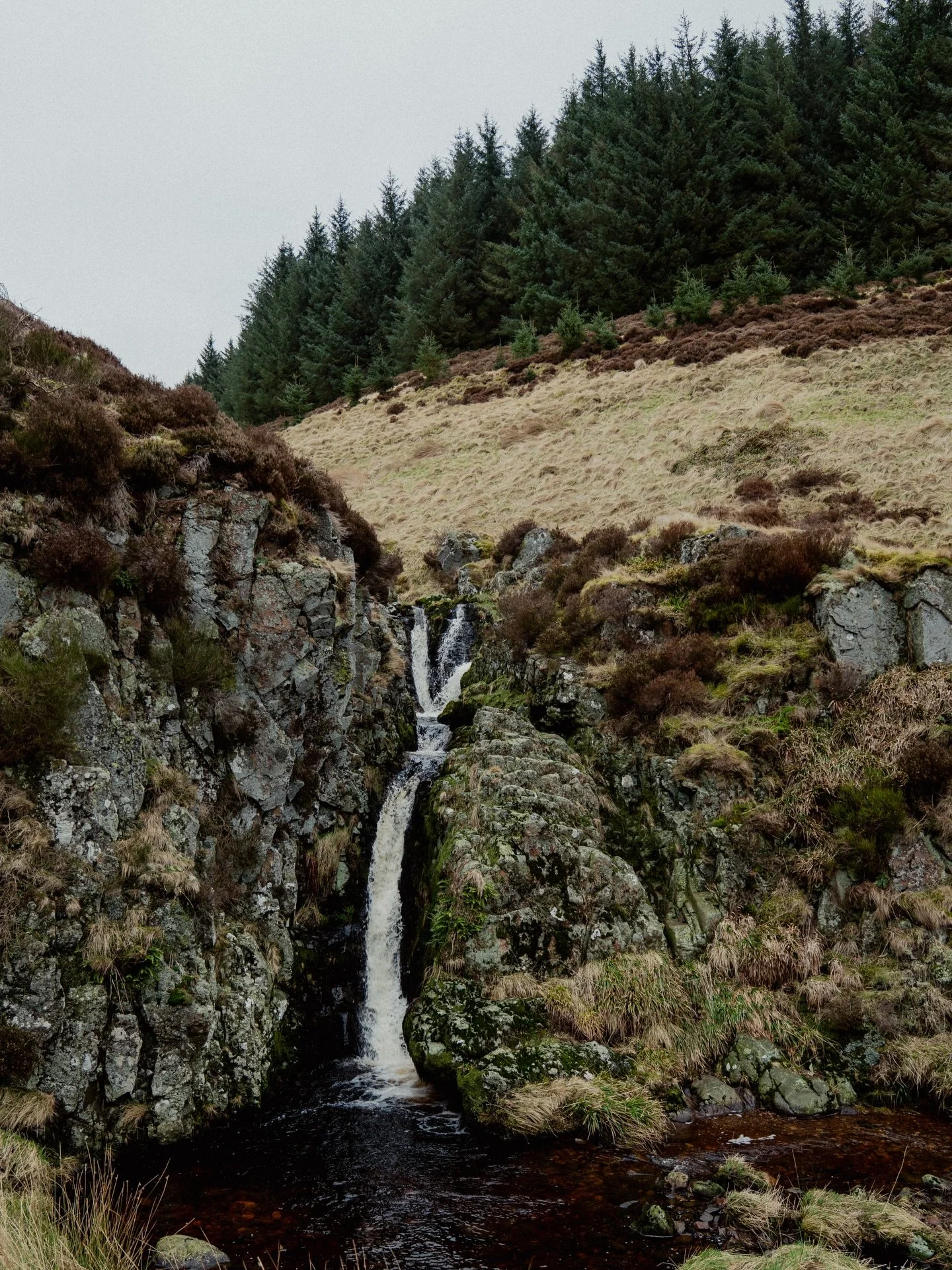
For serious walkers only. Davidson's Linn is tucked deep into the most remote corner of Northumberland National Park, near the Scottish border, and reaching it requires around ten miles of challenging walking through spectacular borderland landscapes. The route from Barrowburn in the Upper Coquet valley crosses the ancient drove road of Clennell Street and passes through some of the least-visited terrain in England.
The falls themselves are small but beautiful, a quiet reward at the end of a long day out. The return via Windy Gyle offers 360-degree views across to the Eildon Hills and, on clear days, the Galloway hills beyond Dumfries. Bring a detailed OS map and the navigational confidence to use it.
Getting there: Start from Barrowburn in the Upper Coquet valley. NE65 7BW. Full day; OS Explorer OL16 essential.
Linhope Spout
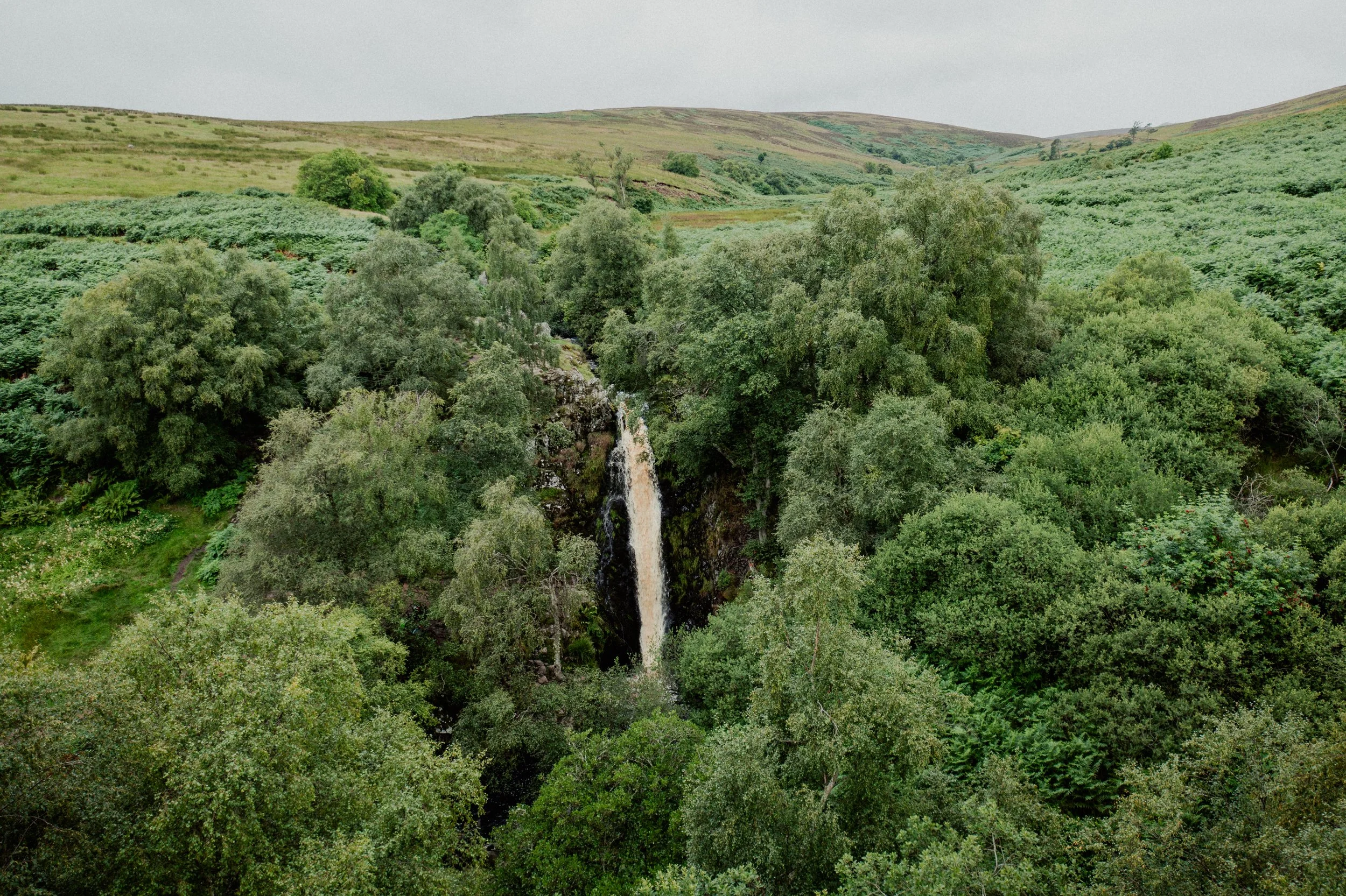
If Northumberland has a signature waterfall, this is it. Hidden in an unexpected opening among steep grassy banks in the Breamish Valley, Linhope Spout drops 18 metres in a single chute before plunging into a pool five metres deep. The scale of it surprises you, especially after a walk that has given little away.
The route starts near Hartside, following the road over gently rolling hills to the hamlet of Linhope before a steep descent to the falls. Allow around an hour there and back, and keep an eye out for red squirrels in the surrounding Scots Pine. The rounded summit of Hedgehope Hill, Northumberland's second highest peak, rises to the northwest, adding scale to an already dramatic landscape.
Getting there: Park on the verge near Hartside, NE66 4LT. Follow the road to Linhope hamlet, then the path to the falls. Dogs on leads throughout.
When to visit
Northumberland's waterfalls are at their most powerful after prolonged rain, particularly in autumn and winter. Spring brings wildflowers and birdlife to the woodland walks. Summer is the time for wild swimming, though water temperatures remain cold year-round. Many paths become slippery after rain, so waterproof boots and trekking poles are recommended for the steeper routes.
The best waterfall walks in Northumberland have one thing in common. They all require you to slow down, look at a map and commit to going somewhere. That, as it turns out, is rather the point of the Northumberland 250.