
Haunted Northumberland
From clifftop castles to a Bronze Age stone circle, Northumberland’s landscapes have two thousand years of history behind them, and plenty of ghost stories to match. Romans, Vikings, Border Reivers and Jacobites all left their mark here. A few, if the stories are true, never left at all. These are the county’s most atmospheric sites, where the past seems to hang around a little longer than it should, along with everything you need to visit them.
1. Winter’s Gibbet
In 1791, Margaret Crozier was murdered at her home near Elsdon. William Winter was hanged for the crime in Newcastle in 1792, and his body was brought back to the moors and hung in chains at Steng Cross, in sight of the scene. The post standing today is a replica, complete with a wooden head swinging from the arm. Locals say that on still nights you can hear creaking timber and the clank of chains. Splinters from the original gibbet were once rubbed on the gums as a cure for toothache.
Plan your visit: The gibbet stands nearly three miles south-east of Elsdon, roughly halfway between Elsdon and Harwood at the forest edge. There are no signs, so it’s easy to drive past. From the A696 at Otterburn, follow the B6341 for two or three miles. There’s a spot to park by a National Park marker, with the gibbet across the road. Free, open access. Look for the stone at its foot: it’s the base of the medieval Steng Cross, which marked the high point of an old drove road between Scotland and England.
2. Chillingham Castle
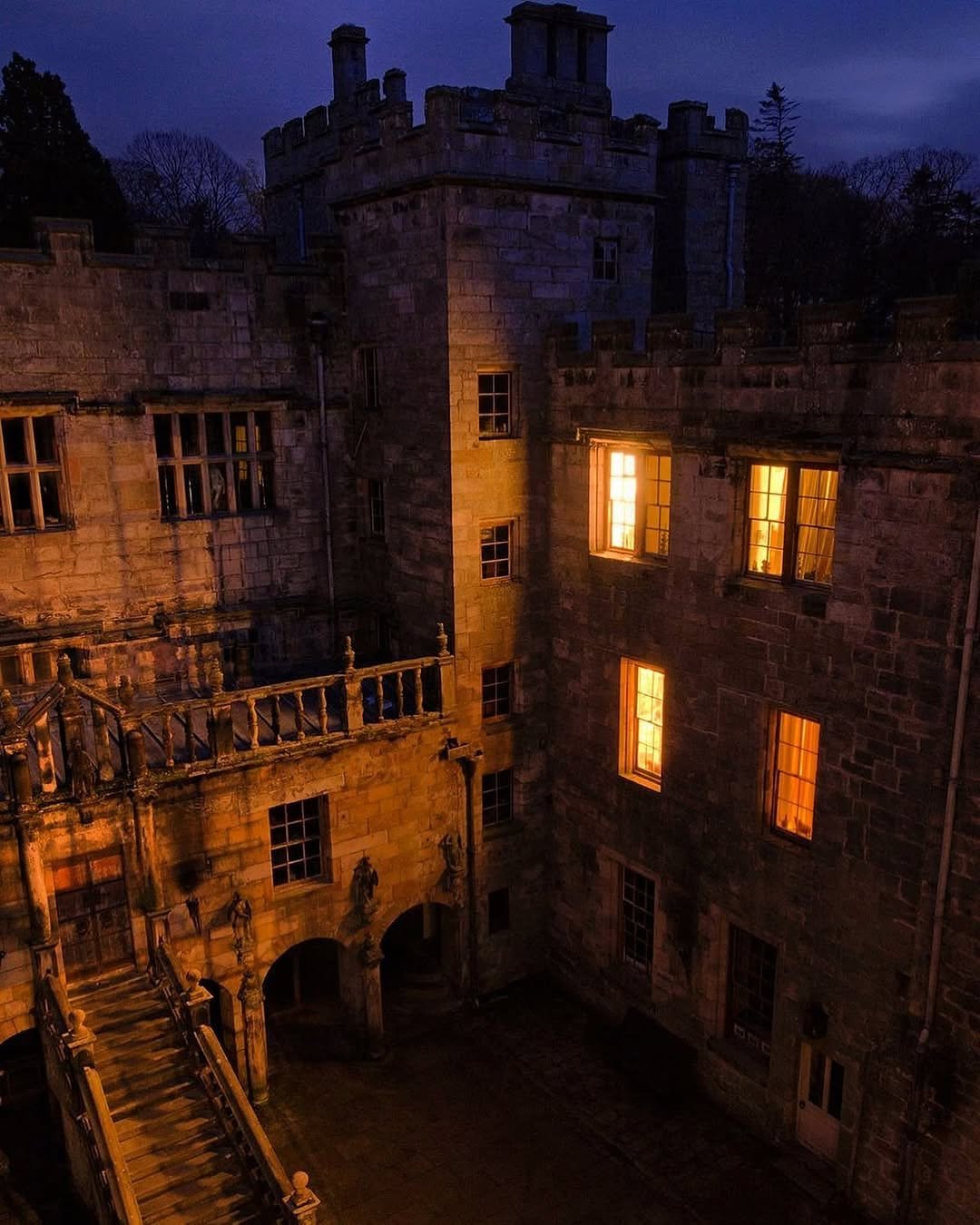
Often billed as the most haunted castle in Britain, Chillingham has stood near Chatton since the 12th century and was licensed to fortify in 1344. Its best-known ghost is the Blue Boy. Guests in the Pink Room reported a blue glow and the sound of crying near one wall. When the wall was opened, workmen are said to have found the bones of a child alongside scraps of blue cloth. Add a torture chamber, a dungeon and centuries of Border warfare, and you have a castle that fully embraces its reputation, with ghost tours and overnight stays.
Plan your visit: Daytime opening in 2026 runs daily until Sunday 1 November, 11am to 5pm with last entry at 4pm, then closes to day visitors until Easter 2027. Evening ghost tours and hunts run separately and must be booked ahead. Ghost tours are for over 16s and last about two hours. Ghost hunts are over 18s only and run for four hours, from 10pm to 2am. Family ghost tours run in school holidays. Tours sell out quickly, so book early. Postcode: NE66 5NJ. While you’re there, look out for the herd of around 100 Chillingham Wild Cattle, one of the world’s rarest breeds.
3. Duddo Five Stones
On a low rise in the farmland south-west of Berwick-upon-Tweed, the Duddo Five Stones have stood for around 4,000 years. Digging in 1903 turned up cremated human bone, so this was a place of the dead as well as ceremony. Wind and rain have carved deep grooves into the stones, and one local tale holds that they are farmers turned to stone for working on the Sabbath. Walk up the field path at dusk, with the Cheviots darkening to the south, and it’s easy to see why people still come to stand in the circle.
Plan your visit: Free to visit, with free parking on the grass verge of a narrow lane, so leave room for other traffic. Use postcode TD15 2PS or what3words vine.obstruct.advantage to get close, then follow the signs. The landowner at Duddo Farm allows access along a signposted path, about half an hour’s walk. The path can get slippy after rain, so wear decent boots. Listen out on a windy day: the stones are sometimes called the Singing Stones for the whistle the wind makes through them.
4. Dunstanburgh Castle
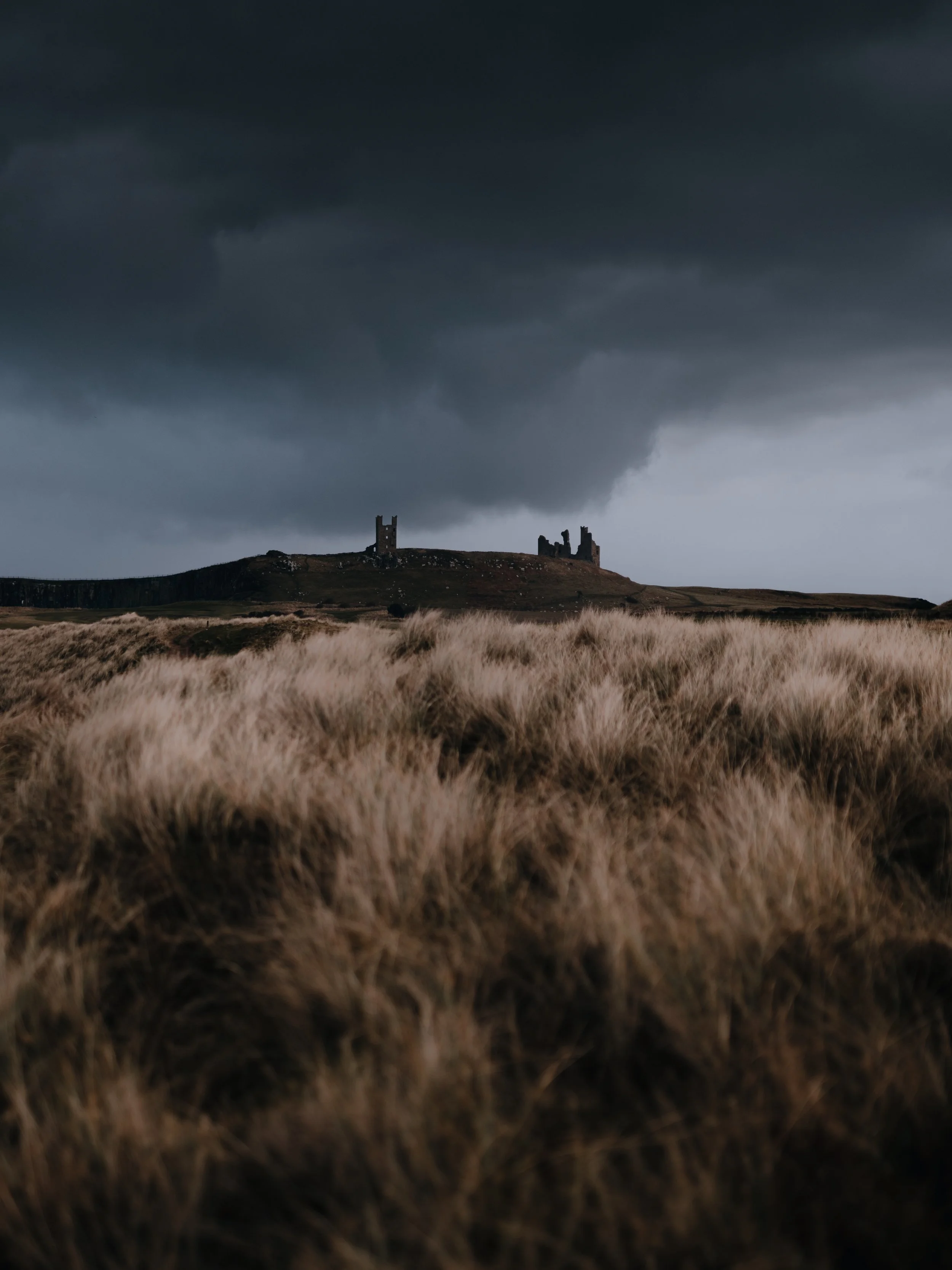
Thomas, Earl of Lancaster began building Dunstanburgh in 1313 and barely got to enjoy it. He rebelled against Edward II and was executed for treason in 1322, reportedly after a botched beheading. His ghost is said to roam the ruins, head in hand. Then there’s Sir Guy the Seeker, a knight who sheltered here in a storm and was led by a wizard to a hall where a lady lay enchanted, ringed by sleeping knights. Offered a sword or a horn, he chose the horn, woke the guards and lost her for good. He has been searching the ruins ever since. The castle is reached only on foot, along 1.3 miles of coast path from Craster.
Plan your visit: Park in Craster and walk north along the coast. The castle is run by English Heritage, and National Trust members get in free with their card. Last entry is an hour before closing. Winter opening is reduced, so check the English Heritage website before you set off. Booking online in advance is cheaper than paying on the day. The coast path crosses working farmland with livestock, so keep dogs on leads. Reward yourself with kippers in Craster on the way back.
5. Lindisfarne Priory
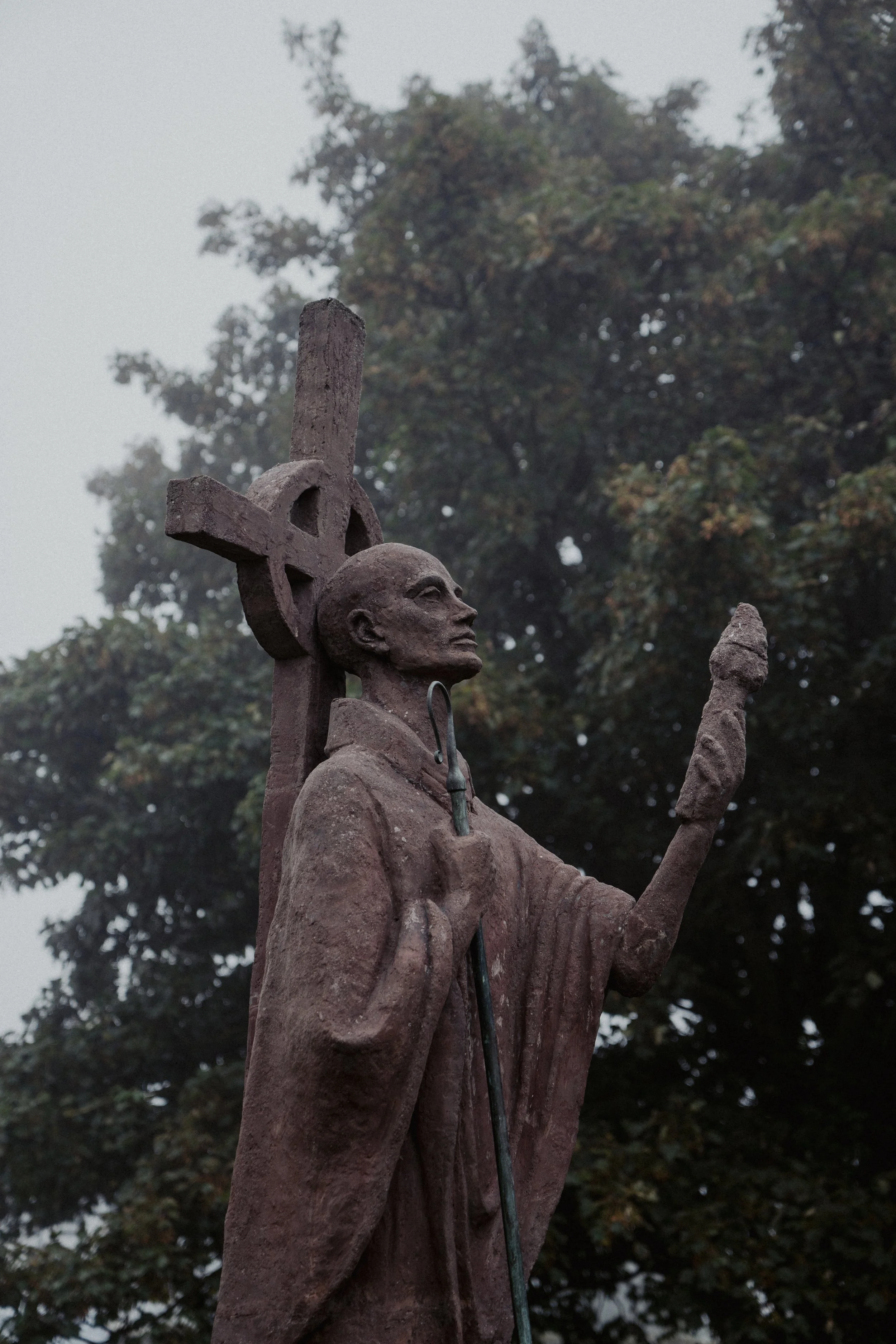
Saint Aidan founded a monastery on Holy Island in AD 635. In 793, Viking raiders sacked it, an attack usually taken as the start of the Viking Age in Britain. The red sandstone ruins you see today belong to the Benedictine priory built on the site in the 12th century. Visitors report chanting with no choir in sight and hooded figures at dusk. The tide sharpens the mood: when the causeway closes, the island belongs to the few who stayed, and whatever else lingers. Check safe crossing times before you go.
Plan your visit: The causeway is cut off by the tide twice a day. The priory’s opening hours change day to day with the tides, so check the English Heritage website for your date. Park in the pay and display car park, about five minutes’ walk from the priory. Postcode: TD15 2RX. There are no toilets on site; the nearest are in the village. Don’t miss the museum: it holds the Viking Raiders Stone, which shows the attack of 793.
6. Bamburgh Castle
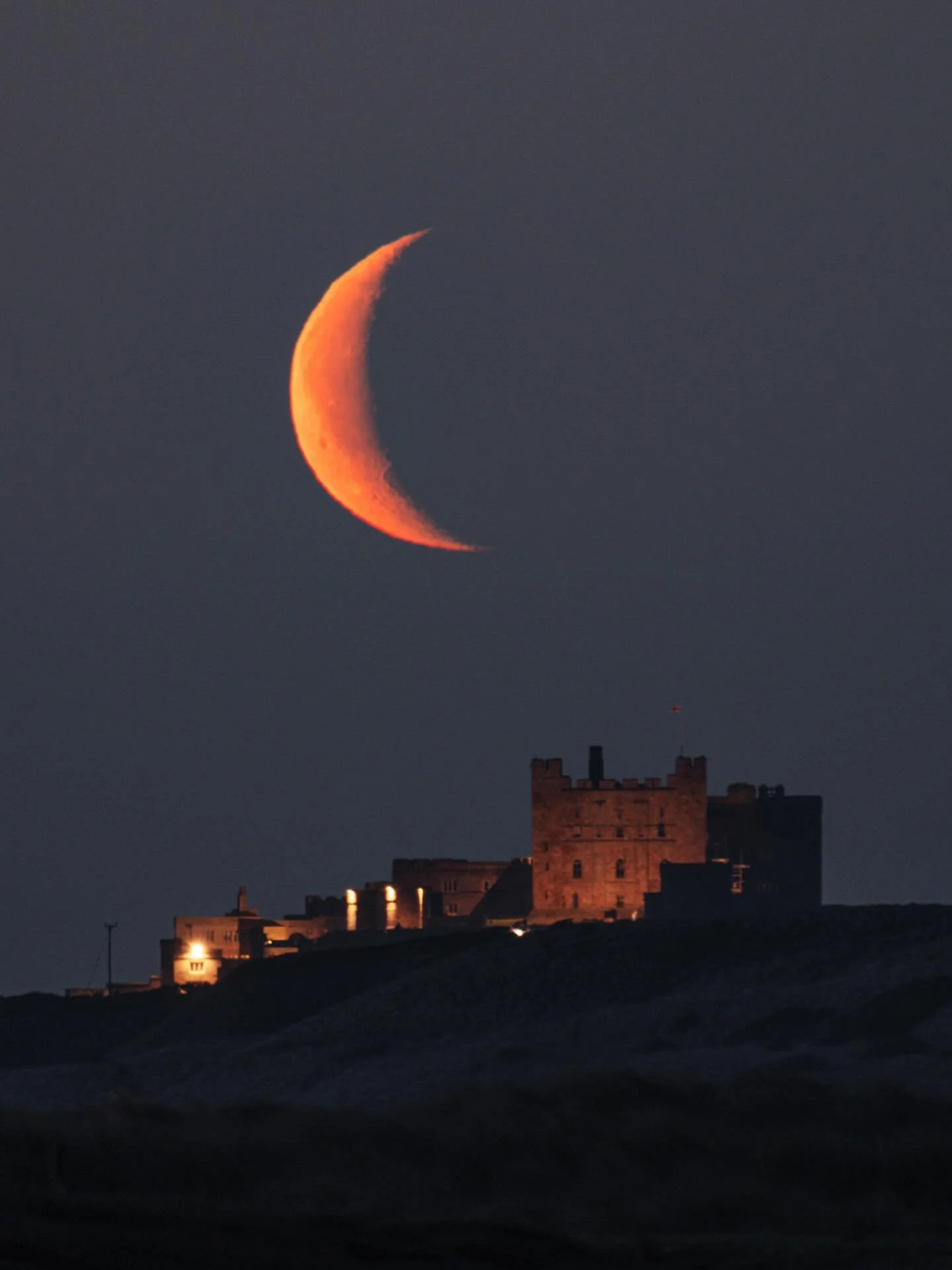
There has been a fortress on this crag above the North Sea for around 1,400 years. Its resident ghost is the Pink Lady. Legend says a Northumbrian princess fell for a man her father disapproved of. The king sent him overseas, then told her he had married someone else. Heartbroken, she put on the pink gown she had been saving for his return and threw herself from the battlements. Every seven years, so the story goes, she walks the castle and down onto the dunes, still dressed in pink.
Plan your visit: Open seven days a week, 10am to 5pm, with last admission at 4pm. Parking isn’t included in your ticket. The castle’s own car park is up the hill, and the road-level car park opposite is run by the council. A free shuttle buggy runs from the castle car park for visitors with reduced mobility. Dogs on short leads are welcome. Postcode: NE69 7DF. Afterwards, walk the dunes where the Pink Lady is said to wander.
7. Seaton Delaval Hall
Designed by Sir John Vanbrugh and completed in 1728, Seaton Delaval Hall was home to the Delavals, a family famous for lavish parties, theatricals and elaborate pranks. Not everyone here was having a good time. A figure in white is said to appear at a first-floor window. According to legend, she was a young woman who fell in love with a Delaval heir. The family forbade the match and sent him to the far end of the country to find a better one. He never returned, and she died of a broken heart. The White Lady is still said to watch from the window, waiting.
Plan your visit: Run by the National Trust at The Avenue, Seaton Sluice, NE26 4QR. The visitor car park is free. No car? The Arriva X7 from Newcastle Haymarket stops at the hall, and Seaton Delaval station on the Northumberland Line connects with it. Footpaths link the hall to Seaton Sluice, three quarters of a mile away. Check the National Trust website for seasonal opening.
8. Alnwick Castle
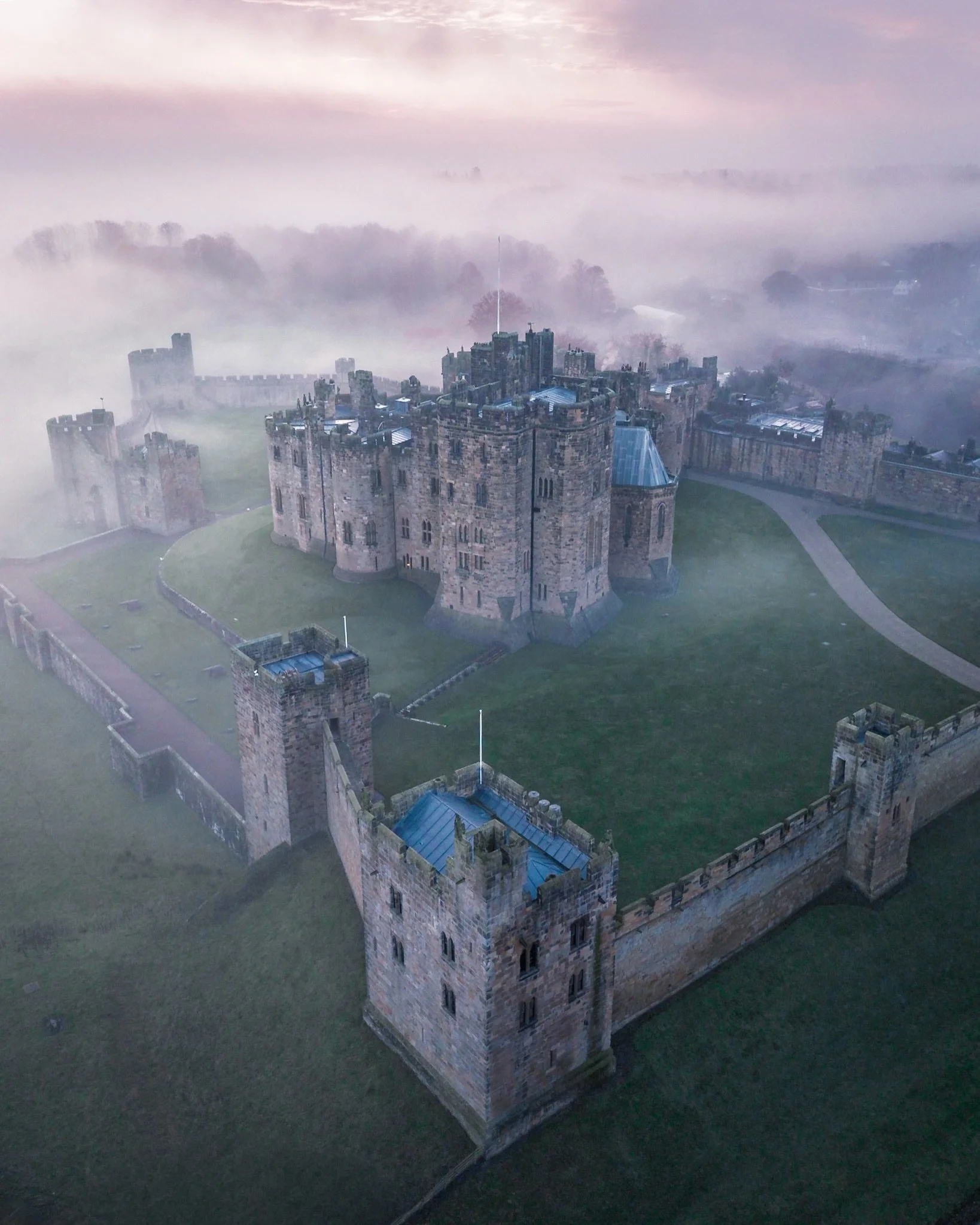
Alnwick has a vampire. The 12th-century chronicler William of Newburgh recorded the tale of a disreputable man who died after falling from a roof while spying on his wife. He didn’t stay buried. Rising at night, he roamed the streets, and a deadly sickness followed in his wake. Two brothers dug up the corpse, found it swollen with blood and burned it. The plague, the story goes, ended there. It’s a dark footnote to a castle better known today for its starring film roles.
Plan your visit: The castle opens seasonally from late March to October and closes over winter. The 2026 season runs from 27 March to 25 October, so it’s closed by Halloween. Go early. It’s less than a mile off the A1 and well signposted, with the main car park off Denwick Lane (B1340). Tickets bought online work as season passes, valid for 12 months from your first visit. Out of season, walk the town and the riverside below the walls instead.
9. Kielder Castle
Built in 1775 as a shooting lodge for the Duke of Northumberland, Kielder Castle sits deep in what is now England’s largest forest. The folklore here is far older than the building. The Border ballad of the Cout of Keeldar tells of a giant Kielder chieftain who rode against the sorcerer Lord Soulis of Hermitage Castle. Enchanted armour made him impossible to wound, so Soulis’s men drove him into the river and held him under until he drowned. Add the Brown Man of the Muirs, a dwarf said to punish hunters who harm moorland creatures, and some of the darkest skies in England, and Kielder after nightfall is a place to stick to the path.
Plan your visit: The castle building has been closed for refurbishment, but the outdoor trails and facilities around it stay open. Check Forestry England for the latest before visiting. Postcode: NE48 1ER. For the full experience, drive the Kielder Forest Drive: a 12-mile forest road from the castle to Blakehopeburnhaugh on the A68, open May to December. It’s a toll road and unsurfaced, best for 4x4s and unsuitable for low cars. Stay after dark for the stars.
10. Edlingham Castle
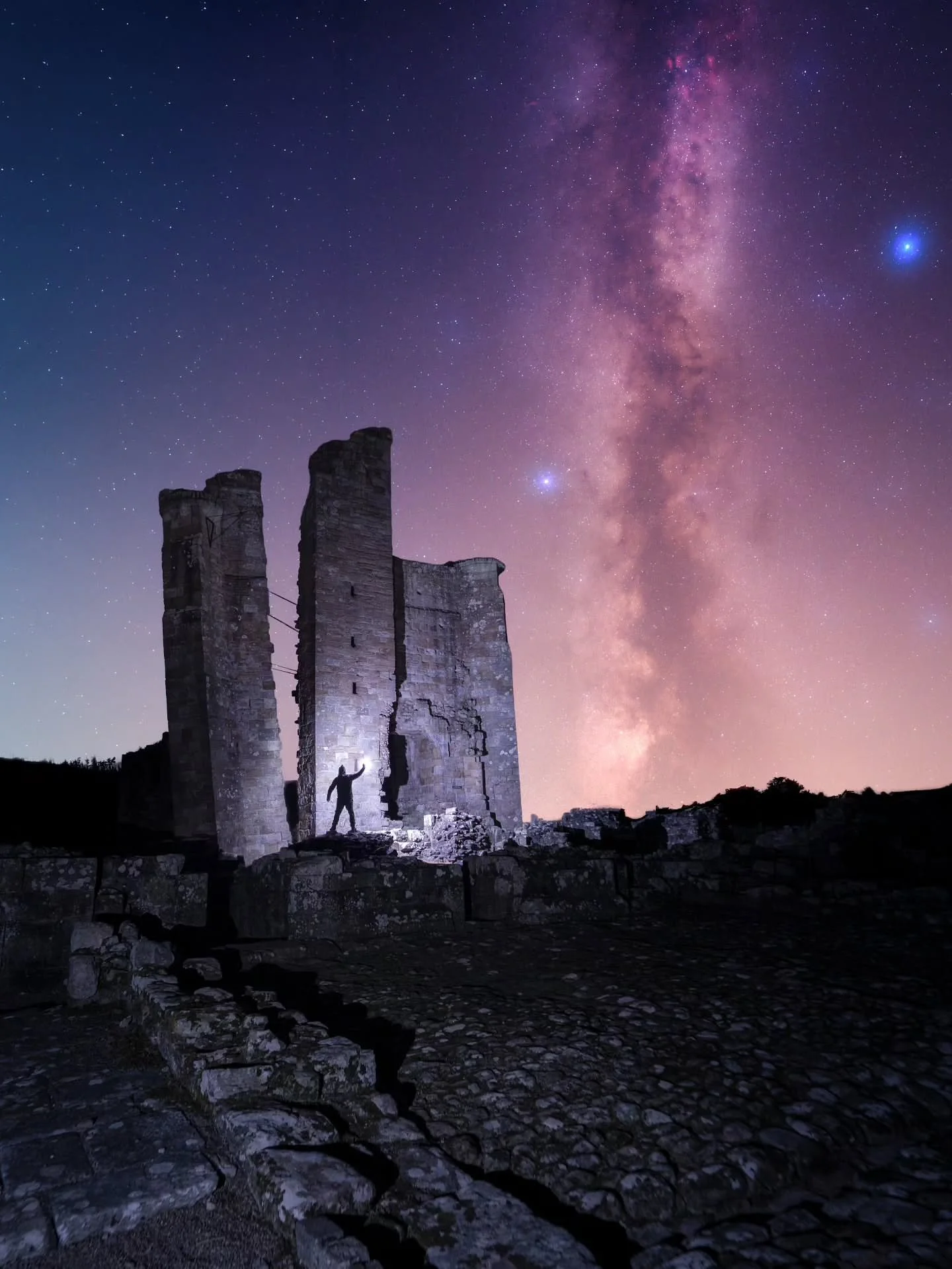
Tucked into a quiet valley south-west of Alnwick, Edlingham is a ruined medieval hall house and tower, cared for by English Heritage and set beside a Norman church and a Victorian railway viaduct. Its darkest story is a human one. In 1683, a local woman named Margaret Stothard was accused of witchcraft by neighbours who blamed her for sickness and misfortune. No record survives of a conviction, but the accusation followed her name for centuries. On a grey afternoon, with the tower leaning on its buttresses above the burn, it’s not hard to see how a valley this lonely bred its own fears.
Plan your visit: Free entry at any reasonable time in daylight hours. There’s a small amount of parking at the church next to the site. Waterproof footwear is recommended, and dogs on leads are welcome. You’ll find it at the east end of Edlingham village on a minor road off the B6341, six miles south-west of Alnwick. Postcode: NE66 2BW. Pop into the church too.