Northumberland’s Best Beaches
Stretching from Tyne to Tweed, this is one of the finest coastlines in England, and most of it is still empty. Golden sands, towering dunes, castle ruins standing where they've stood for six hundred years, and enough distance between beaches that you can have one entirely to yourself if you time it right. Here's where to find Northumberland's best beaches, working up the coast from Tyne to Tweed:
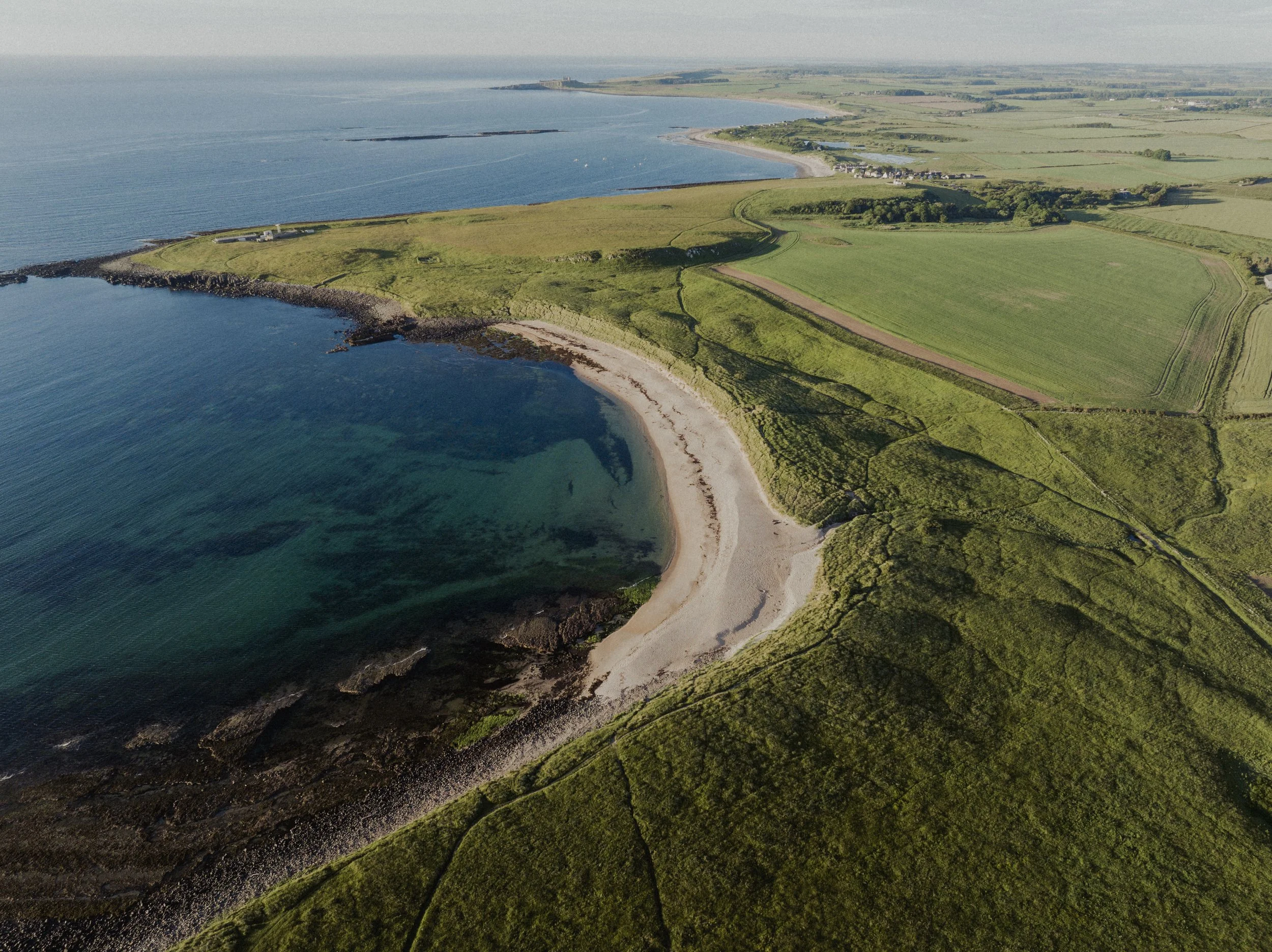
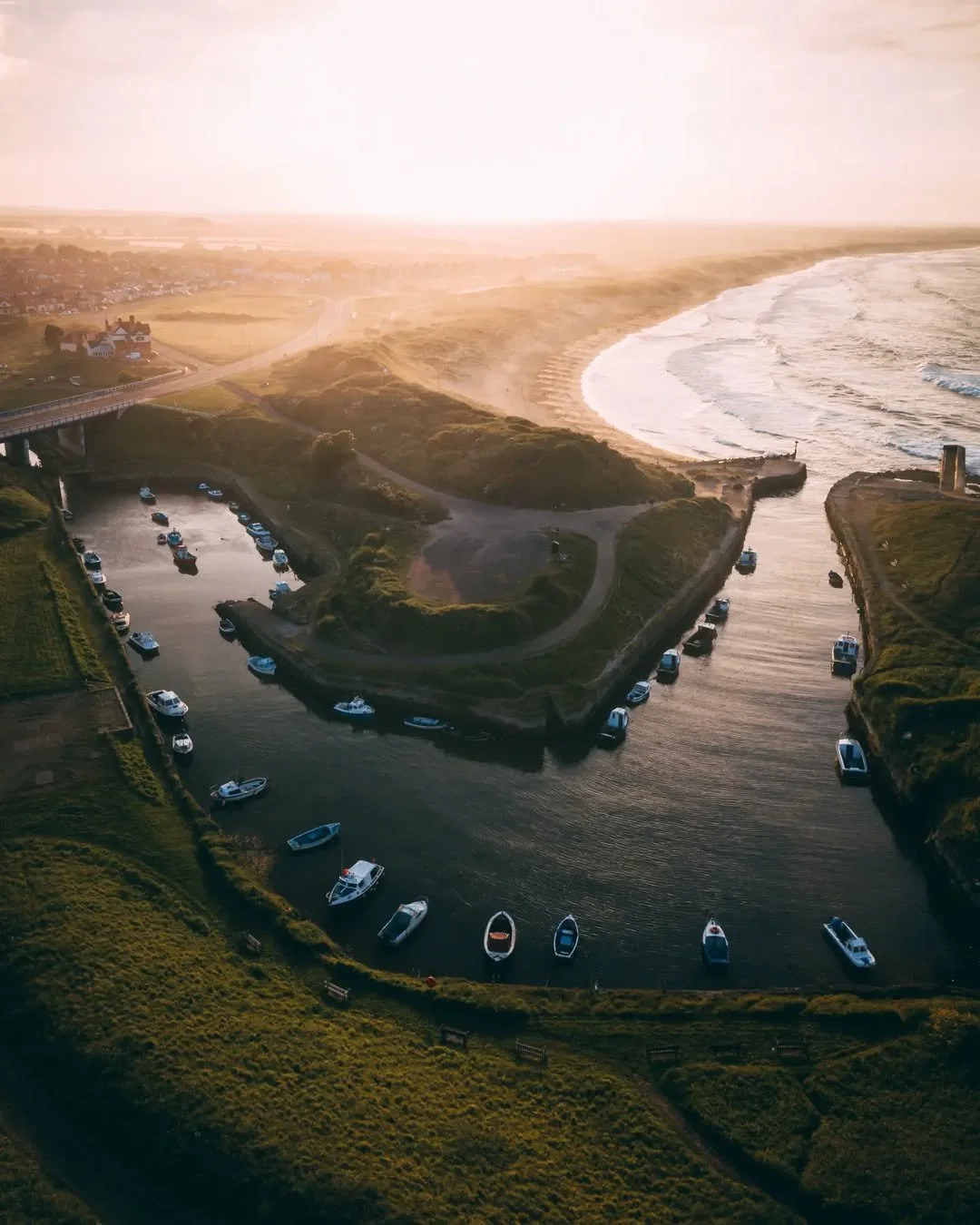
Seaton Sluice
A small harbour village beach at the southern edge of the county, split either side of the old harbour cut. To the north is Collywell Bay, sandy and sheltered; to the south, Seaton Sluice's own stretch runs toward Old Hartley. The Kings Arms sits right by the harbour for a pint after, and the whole spot has more history than its size suggests, from its salt-panning and glass-making past.
Cresswell Beach
The first beach you hit driving up from the south, and an easy one to underrate. Pristine sand, high dunes, and Cresswell Ices right by the entrance for when the walk's done. Head half a mile north out of the village and the paths thin out fast, leading to stretches of sand that stay genuinely quiet even in peak season.
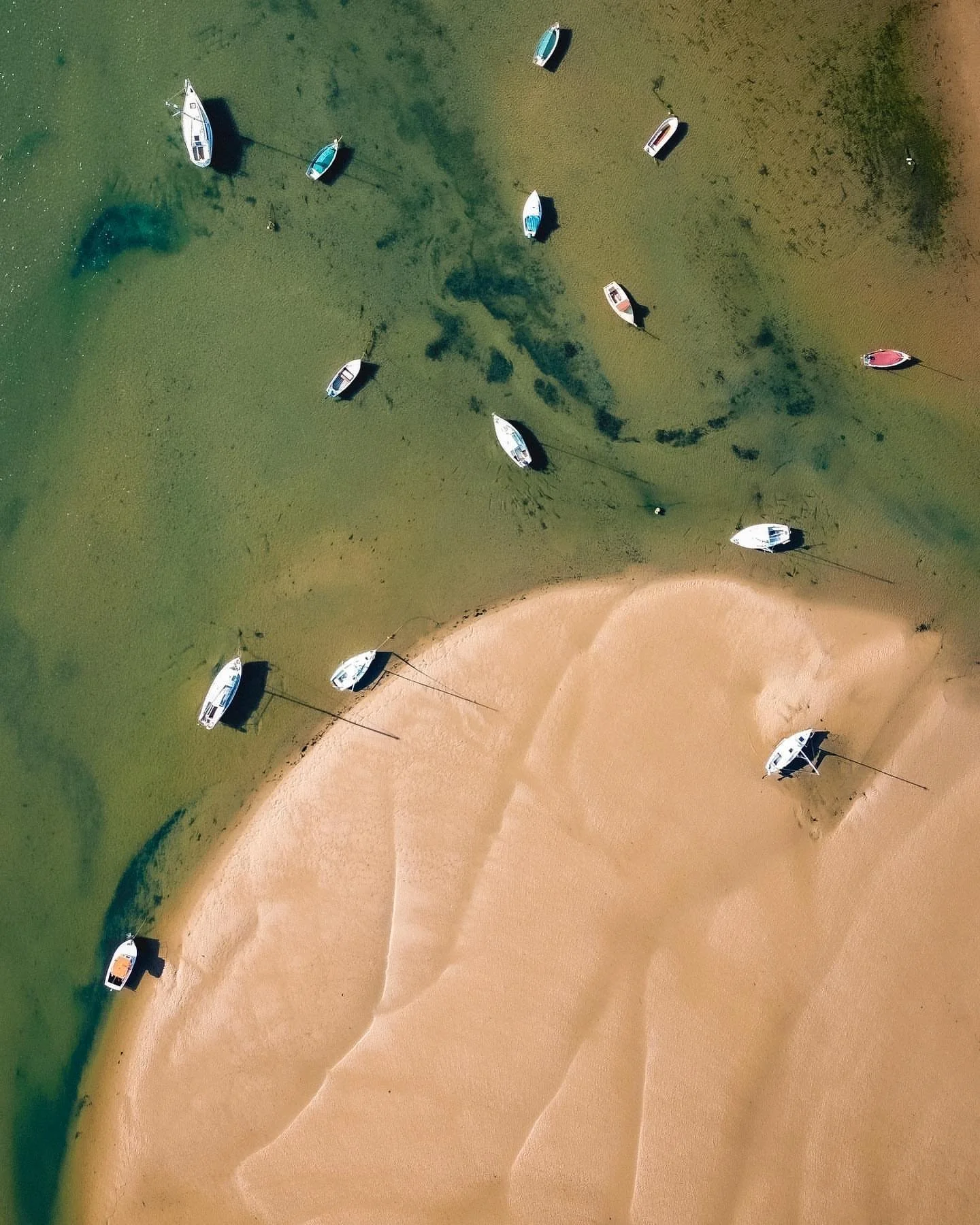
Alnmouth Beach
The village comes first here, painted houses stacked above the Aln estuary, and the beach follows as a reward. Sweeping sand, dunes to wander through, and views back towards the pastel terraces that make Alnmouth one of the coast's prettiest bases. Good for a full day: beach in the morning, village in the afternoon.
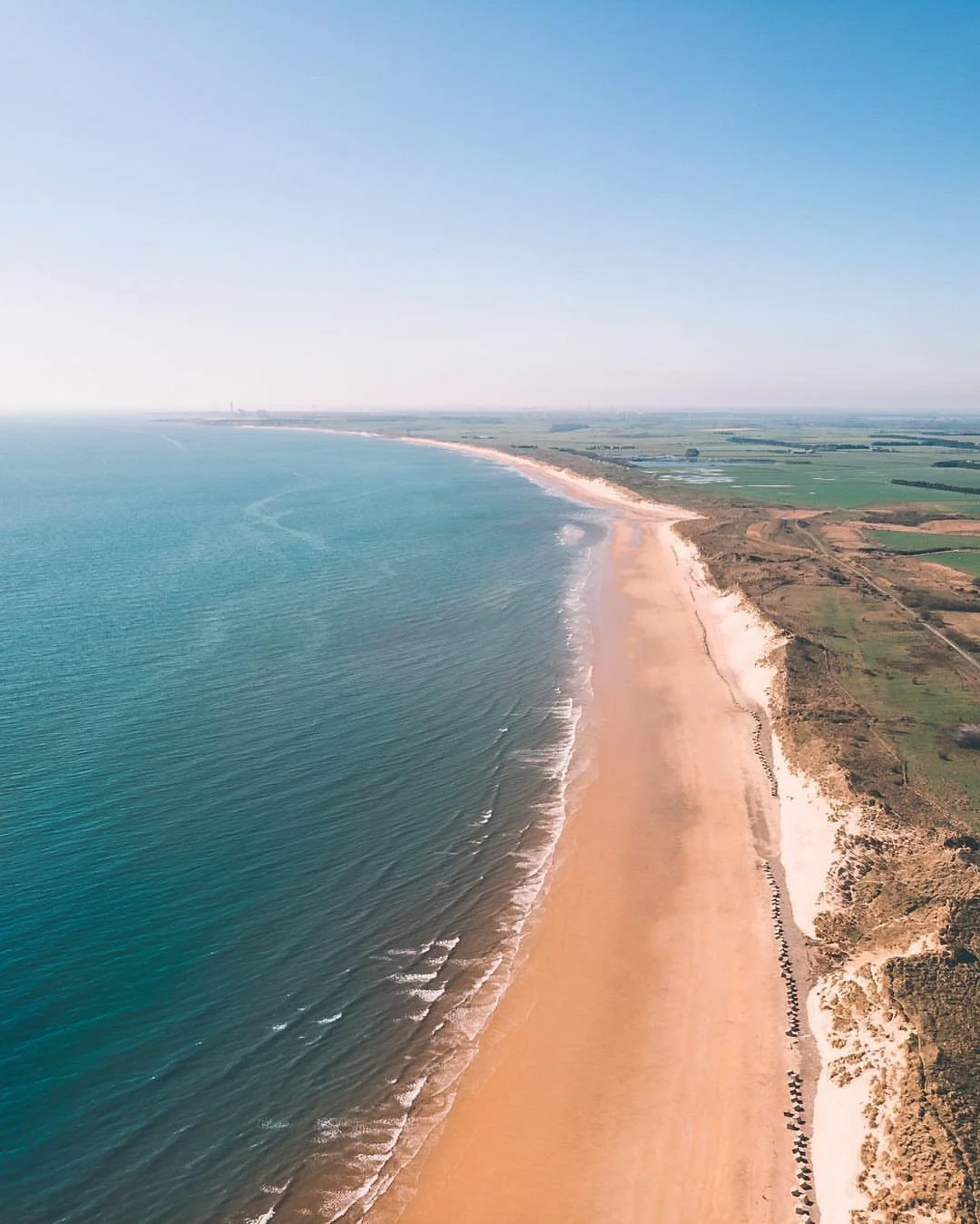
Howick Sands
Tucked below Howick Hall, this is a beach most people never find because it isn't signposted from the road. A footpath through the Howick estate grounds gets you there, past woodland and gardens before the trees open onto sand and rock. The walk in is part of the appeal, and it keeps the numbers down to almost nobody.
Football Hole
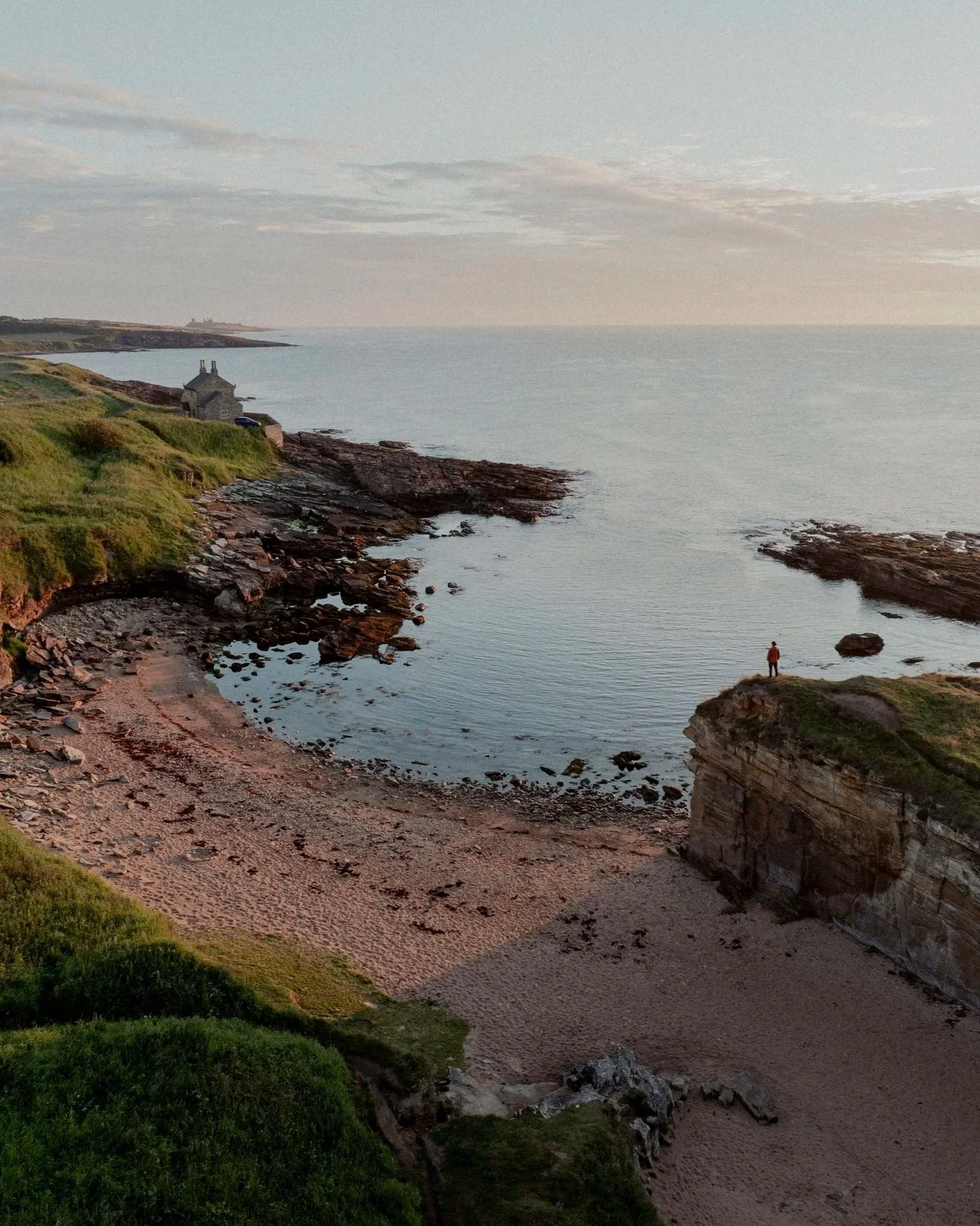
A tiny cove near Cullernose Point, wedged between rock outcrops and reached along the Northumberland Coast Path from Howick or Craster. Football Hole is barely more than a pocket of sand, but that's the draw: at low tide it's sheltered, private, and about as far from a crowded beach car park as this coast gets.
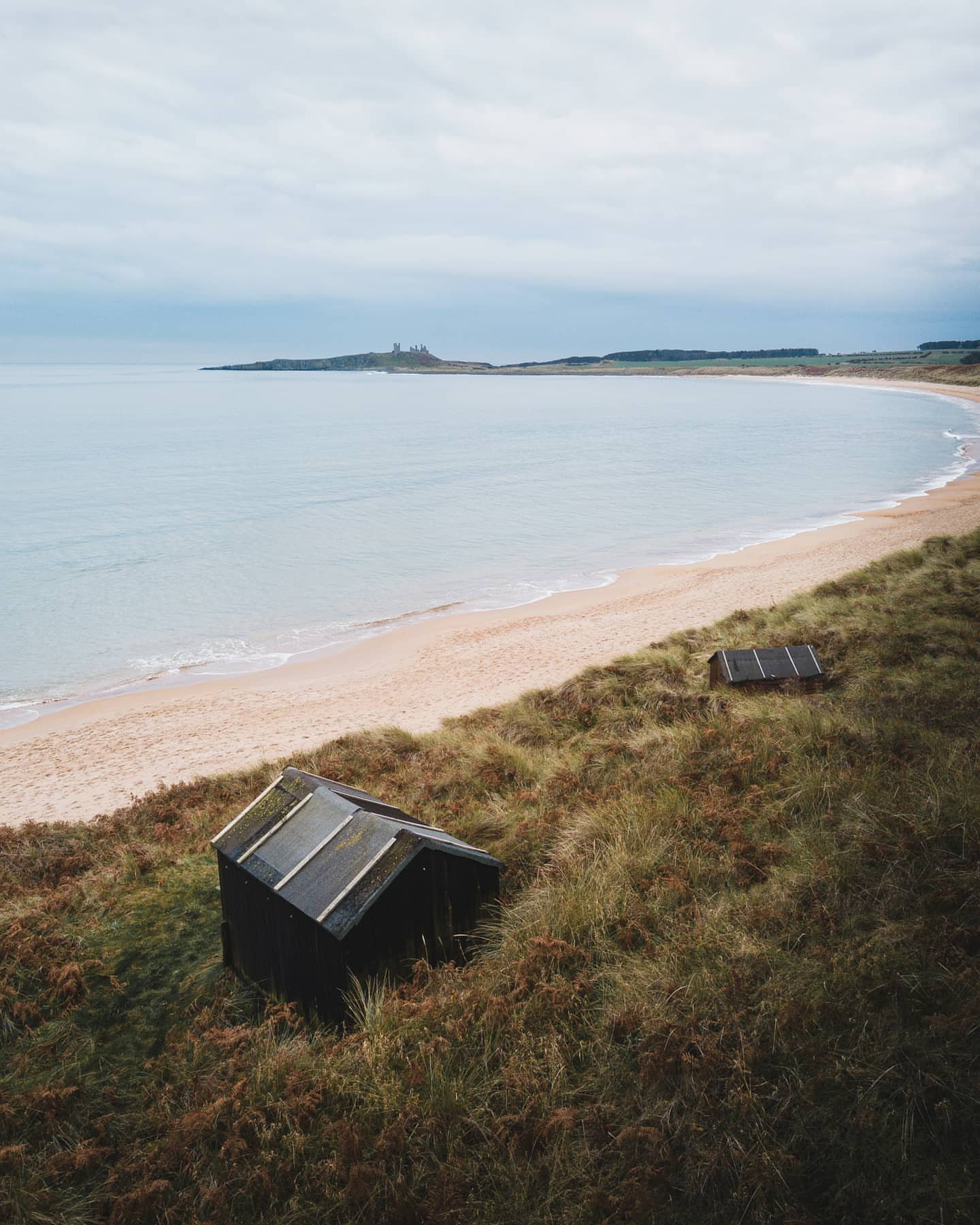
Embleton Bay
Swap one castle for another. Dunstanburgh's ruins sit at the southern end of this long golden bay, reachable by a coastal path from Craster that's worth the walk on its own. The beach itself is quieter than Bamburgh's, backed by dunes and a golf course, and the approach through Embleton village adds a proper sense of arrival.
Beadnell Bay
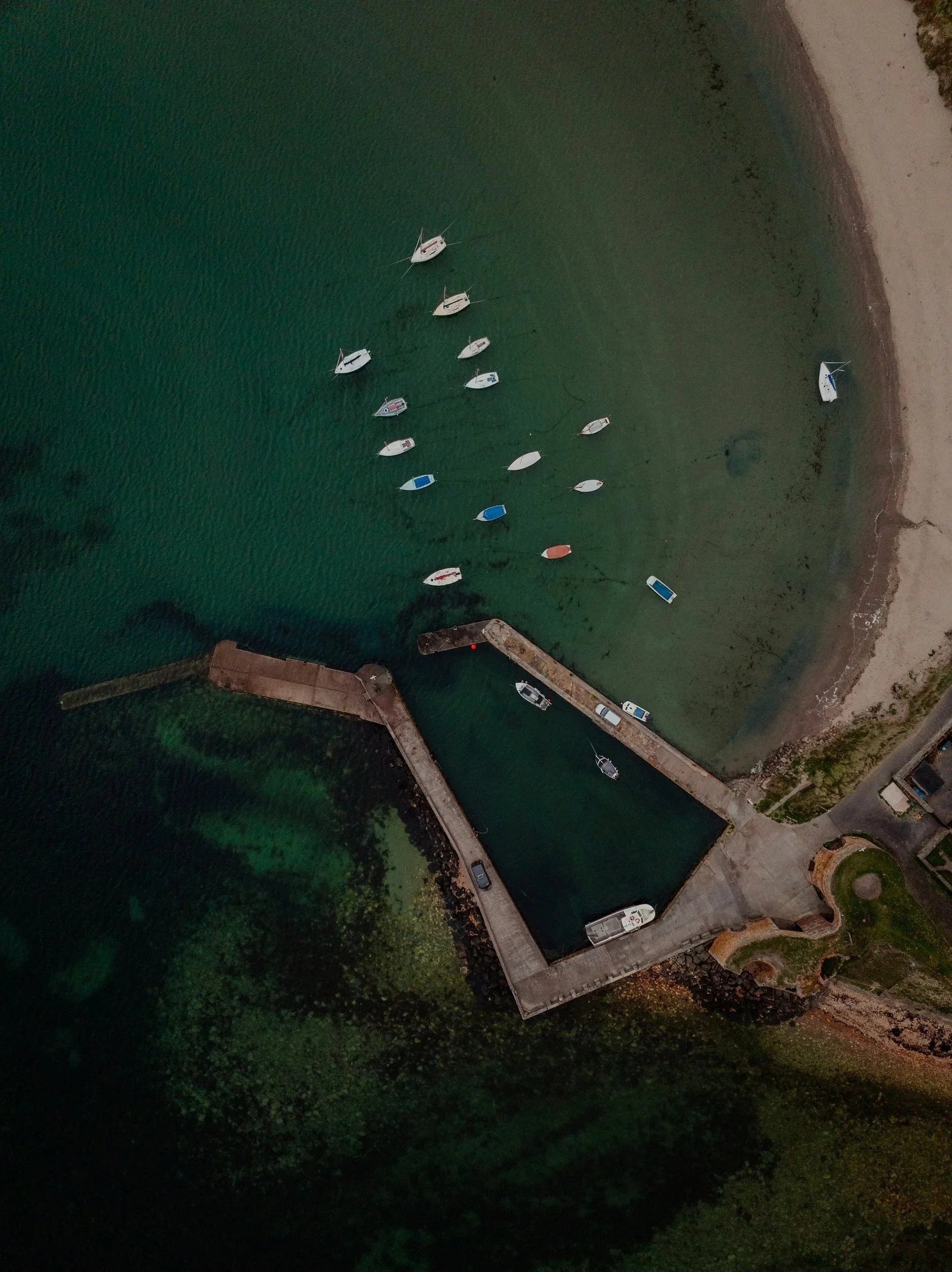
A working harbour at one end, open sand at the other, and enough room in between for the beach to never feel busy. Beadnell faces east and catches the sun early, which makes it a solid pick for a morning walk before the day gets going. The shallow water and gentle slope also make it one of the more forgiving spots for a swim.
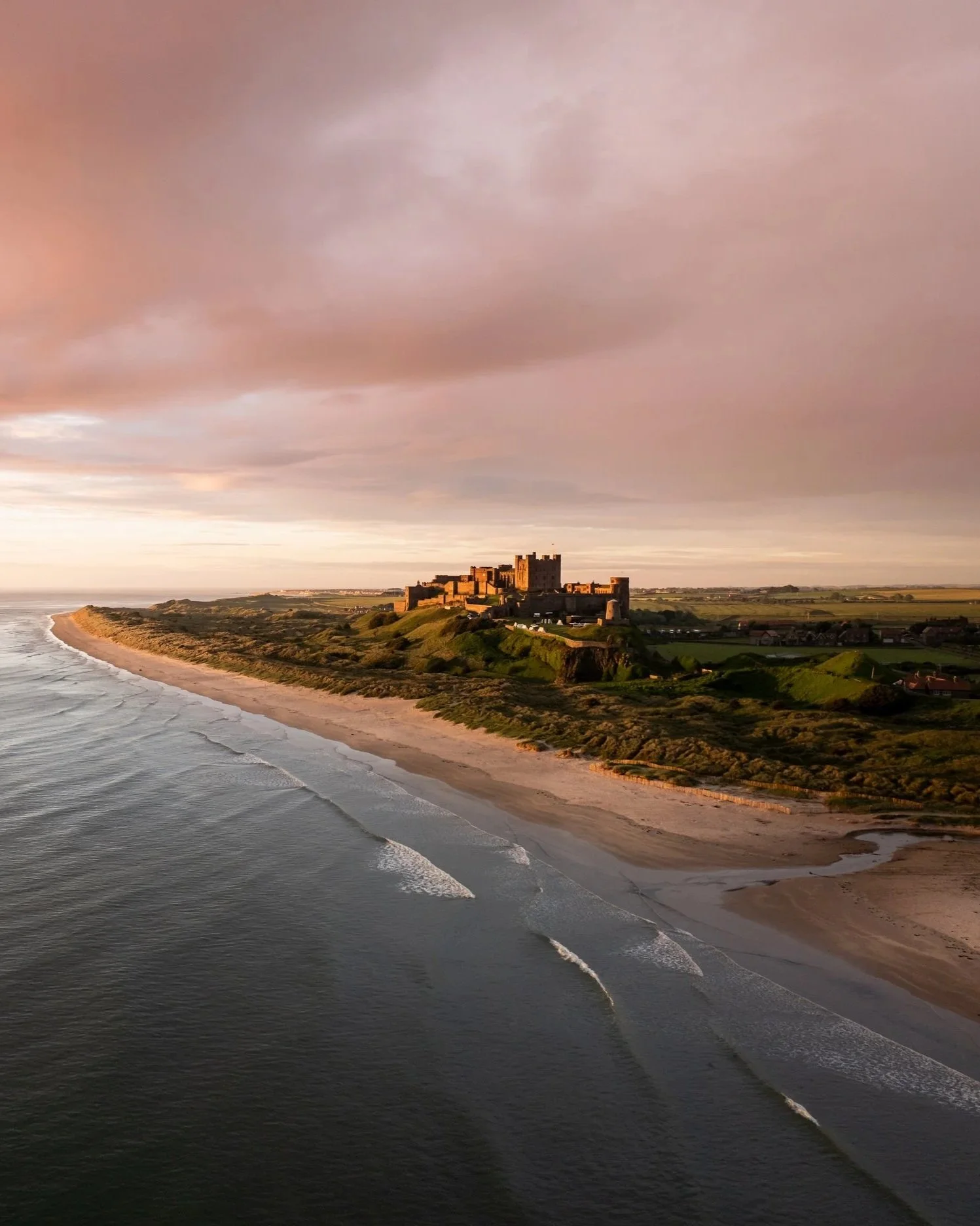
Bamburgh Beach
The one everyone pictures when they think of this coast, and the postcard doesn't lie. Bamburgh Castle rises straight out of the dunes, sandstone against sky, with a beach wide enough that even in August you'll find your own patch of it. Come at low tide for the full stretch of sand, or at dusk when the castle floodlights come on and the whole scene turns cinematic.
Budle Bay
Less a beach, more a vast tidal expanse of sand and mudflats just north of Bamburgh, backed by low hills and best known to birdwatchers rather than sunbathers. At low tide the bay empties out into wading distance towards Lindisfarne, and the light here, especially early morning, is some of the best on the coast. Not one for swimming, but unbeatable for a walk and a pair of binoculars.
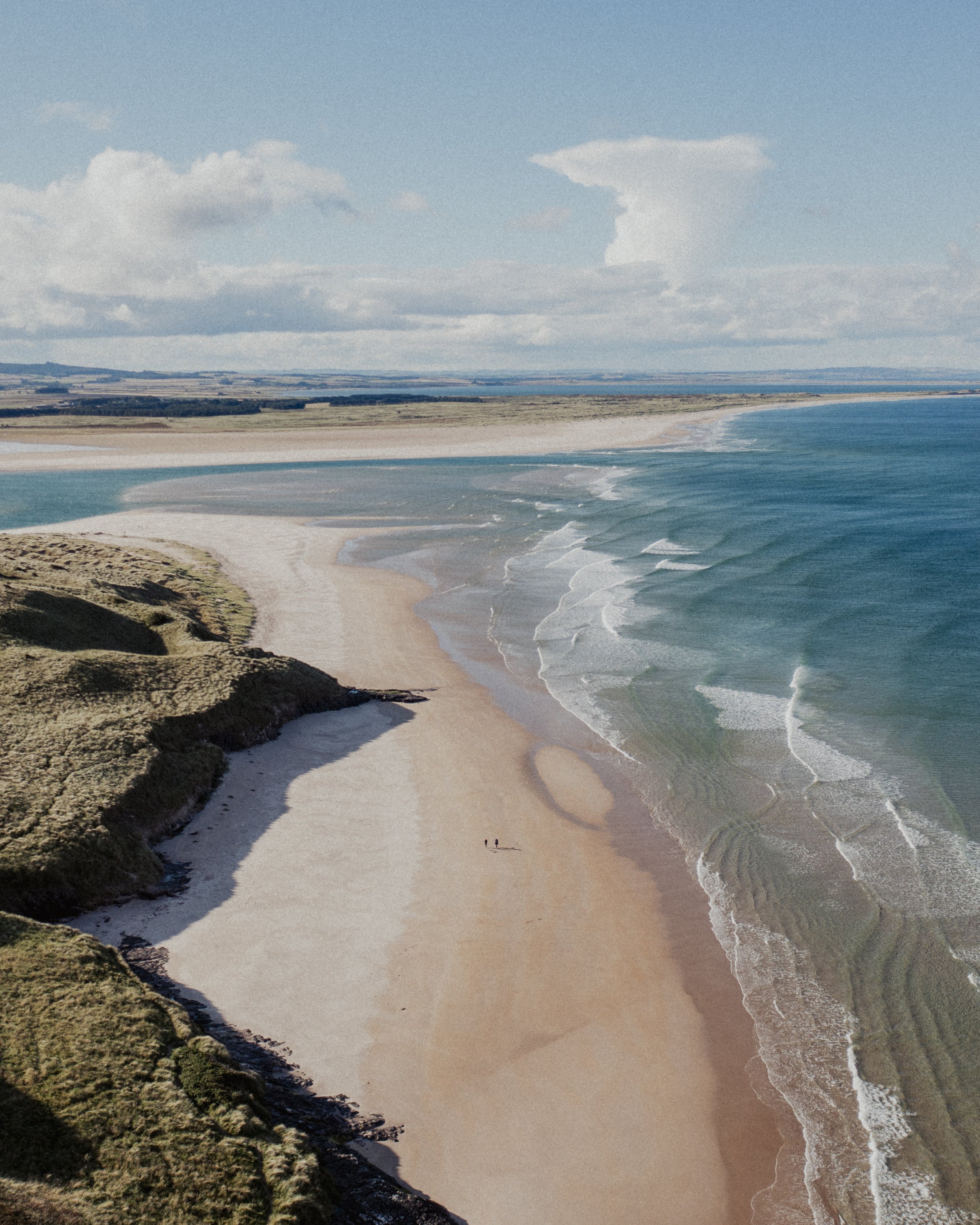
Ross Sands
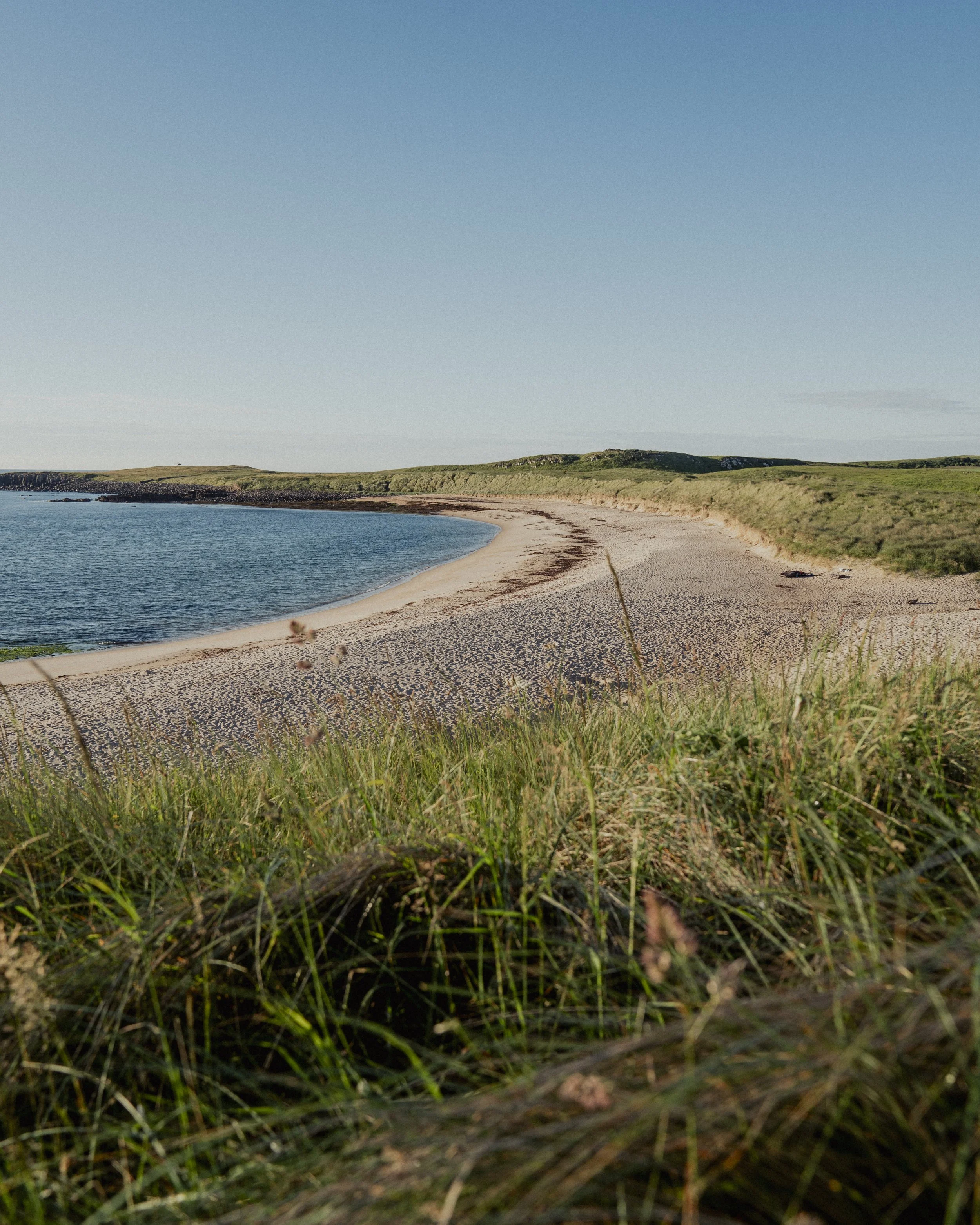
Miles of open sand facing out toward Holy Island, reached down a farm track and a fifteen-minute walk that keeps this one properly quiet. Ross Back Sands has no facilities, no signposts pushing you toward it, and views across to Lindisfarne Castle that make the walk worth it on their own. About as close to untouched as this coast gets.