Northern Lights in Northumberland: When & Where to See the Aurora Borealis
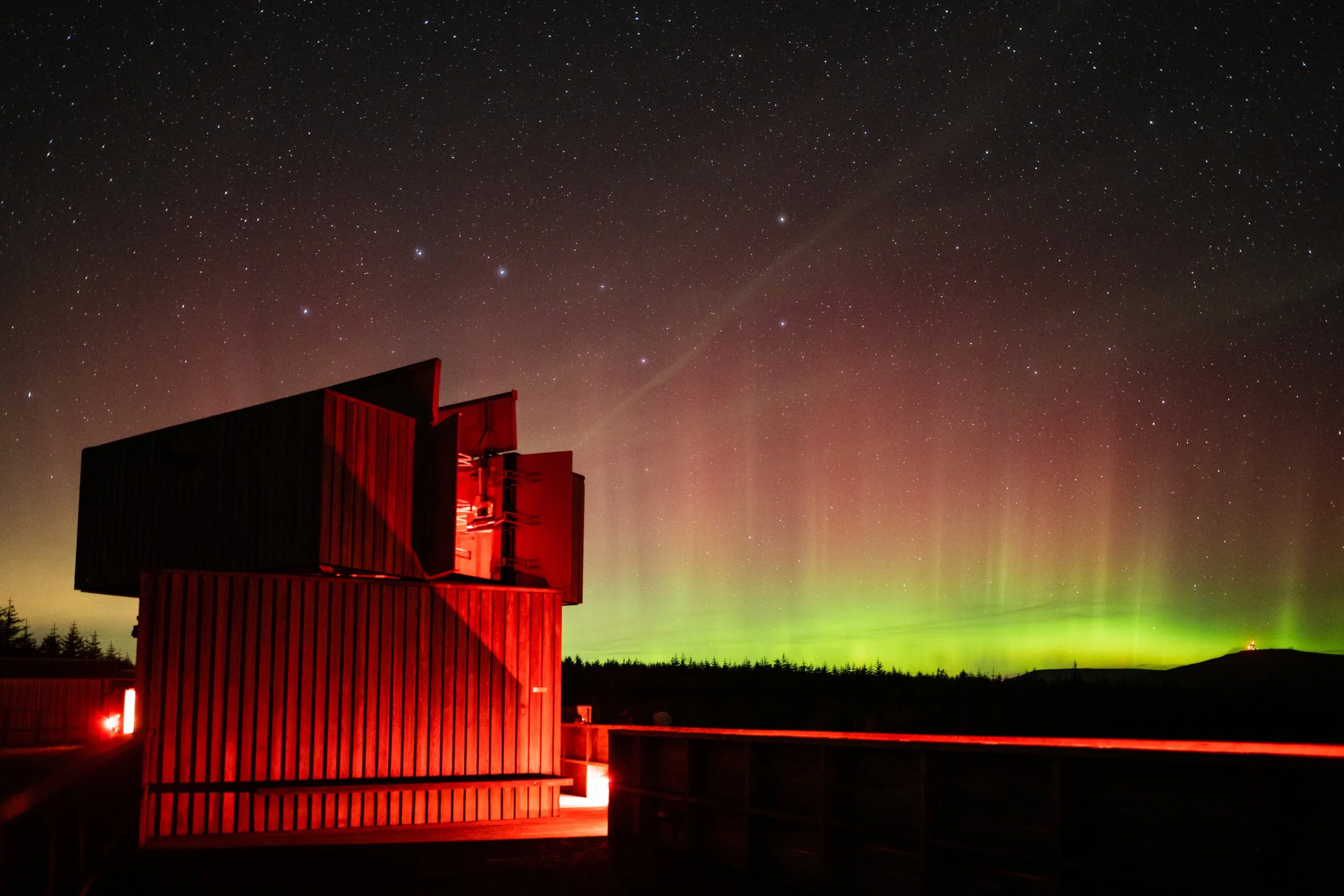
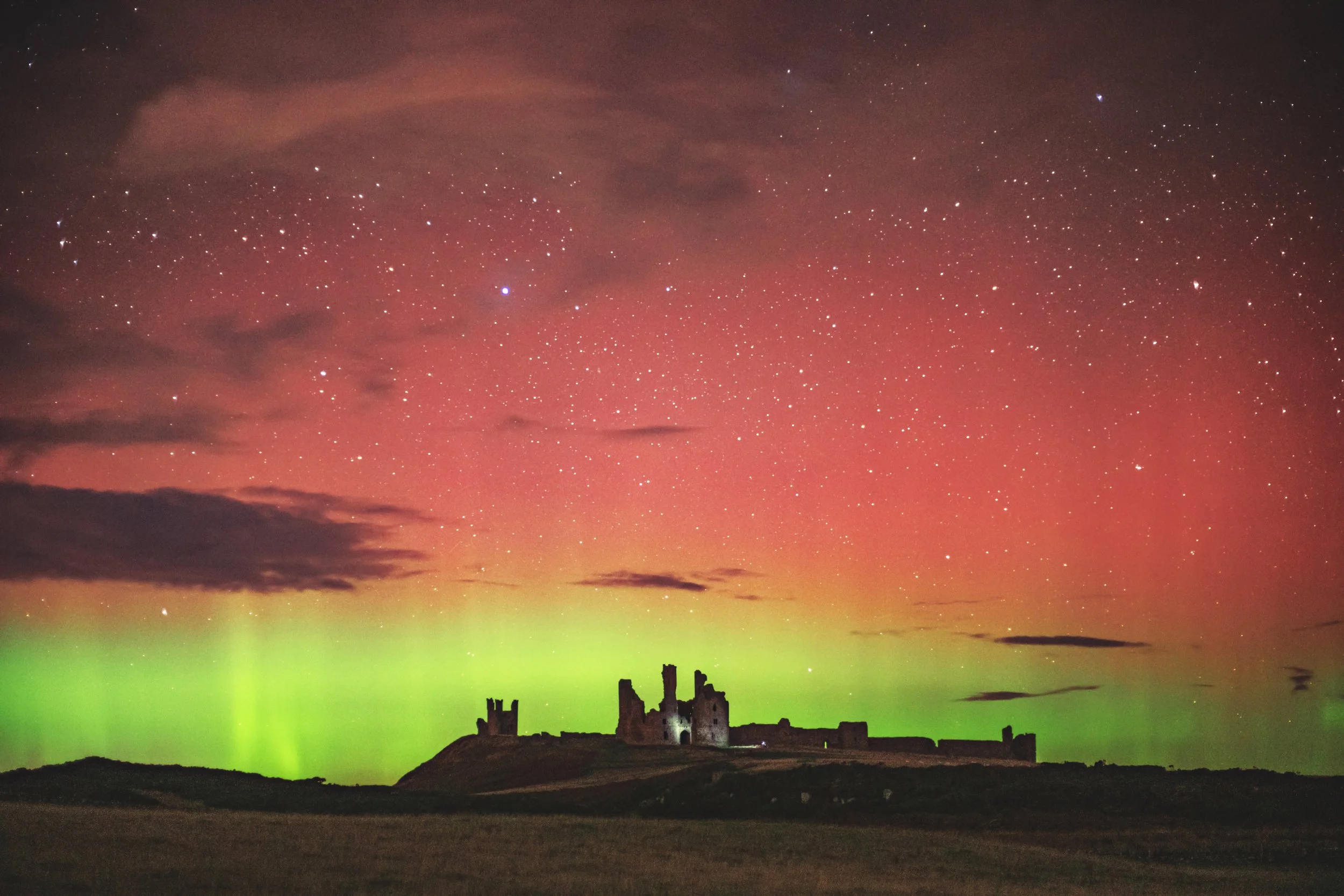
Photography by Daniel Monk
Seeing the Northern Lights in Northumberland may sound unlikely, but this dark-sky county offers one of the best chances in England to witness the Aurora Borealis without travelling abroad. Thanks to exceptionally low light pollution and heightened solar activity, Northumberland has become an increasingly popular destination for aurora hunters.
Whether you’re planning a winter getaway or simply hoping to catch a rare natural phenomenon, Northumberland’s wide horizons, remote landscapes and officially recognised dark skies make it a standout location for Northern Lights tourism in the UK.
Why Northumberland Is One of the Best Places to See the Northern Lights in England
The Northern Lights occur when charged particles from the sun collide with Earth’s atmosphere, creating waves of green, pink and purple light near the planet’s magnetic poles. While they are most common in Arctic regions, strong solar activity can push the aurora much farther south.
Northumberland lies beneath the southern edge of the auroral oval and benefits from:
England’s lowest levels of light pollution
Vast rural landscapes and open skies
Northumberland International Dark Sky Park, the largest in Europe
During periods of increased solar activity, these conditions combine to make aurora sightings possible, even spectacular.
When Can You See the Northern Lights in Northumberland?
The best time to see the Northern Lights in Northumberland is between September and March, when nights are long and skies are dark enough for auroral displays to appear.
Visibility depends on three main factors:
Solar activity
Darkness
Clear or partly clear skies
Solar Maximum: A Rare Opportunity
The sun is currently approaching a solar maximum, the most active phase of its 11-year solar cycle, expected to peak around 2024–2025. During this time, auroras become more frequent and visible at lower latitudes, including northern England.
Astronomers suggest increased auroral activity may continue for several years beyond the peak, meaning the mid-to-late 2020s could offer some of the best aurora opportunities Northumberland has seen in decades.
Best Places to See the Northern Lights in Northumberland
Thanks to its dark-sky status, many parts of the county are suitable for aurora watching. The key is to find an area with minimal artificial light and a clear northern horizon.
Top aurora viewing locations include:
Kielder Observatory & Kielder Forest
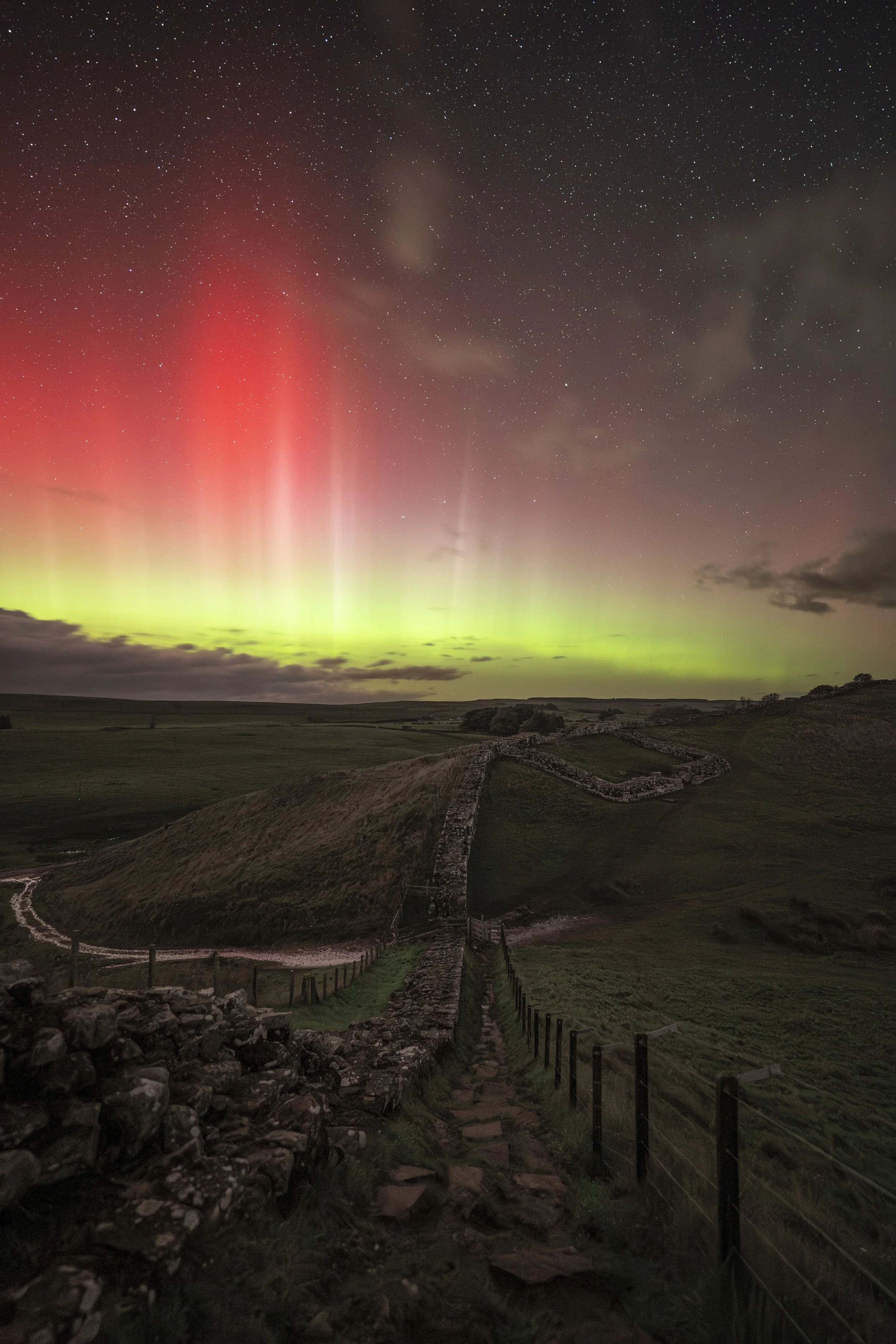
Hadrian’s Wall, particularly remote rural stretches
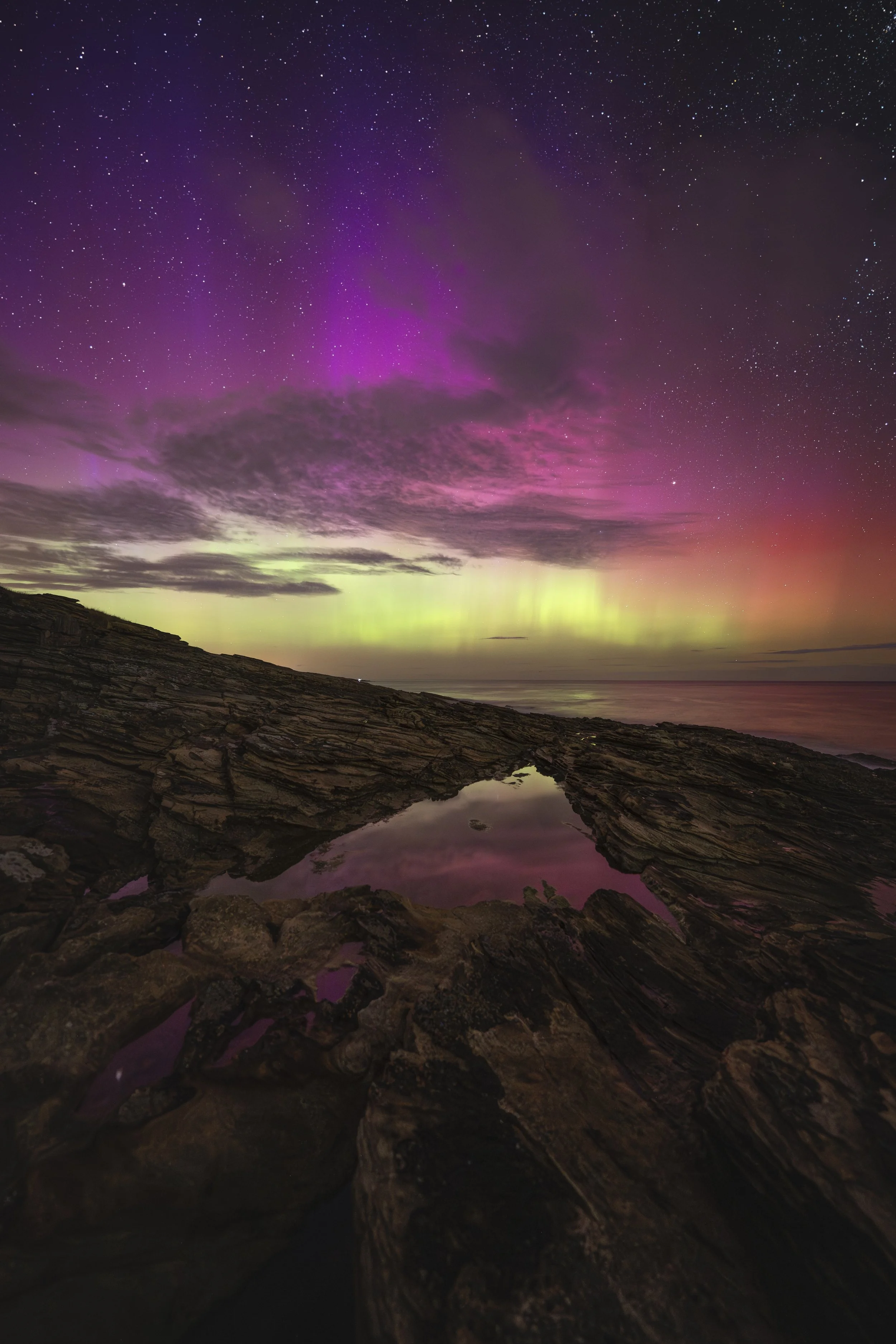
The Northumberland Coast, where sea views offer uninterrupted horizons
North Pennines and remote countryside villages
You don’t always need total isolation—often, simply moving away from streetlights is enough during strong auroral events.
How to Prepare for Northern Lights Watching
According to the Met Office, auroras are best viewed under dark skies with partial cloud cover. Even moderate solar activity can produce impressive displays, while extremely strong storms are relatively rare.
Practical tips:
Monitor aurora forecasts and cloud cover
Dress warmly and prepare for cold, windy conditions
Be patient—auroras can appear suddenly and fade quickly
Watch the northern horizon, as UK auroras often stay low in the sky
Northern Lights Photography in Northumberland
Auroras often appear more vivid in photos than to the naked eye. A camera with a long exposure can capture colours and movement invisible in real time.
Photography tips:
Use a tripod
Set a slow shutter speed
Choose locations with interesting foregrounds, such as ruins, trees or coastlines
Northumberland’s landscapes—Roman walls, ancient castles and dark forests—offer dramatic backdrops for aurora photography.
Where to Stay for Northern Lights Viewing
For the best experience, choose accommodation away from towns and villages. Many rural lodges, cottages and dark-sky friendly hotels allow guests to watch the skies straight from their doorstep. Some locations near Kielder and remote countryside areas actively promote stargazing and aurora watching as part of the experience.
Frequently Asked Questions
Can you really see the Northern Lights in Northumberland?
Yes. While sightings are not guaranteed, Northumberland offers one of the best chances in England due to its dark skies and northern location.
What is the best month to see the Northern Lights in Northumberland?
The best months are October to February, when nights are longest and solar activity is often higher.
Do you need special equipment to see the aurora?
No. The Northern Lights can be seen with the naked eye, though cameras often reveal stronger colours.
Is Northumberland good for stargazing as well?
Absolutely. The county is internationally recognised for its dark skies and is one of the UK’s top stargazing destinations.
Plan Your Northern Lights Trip to Northumberland
Northumberland may not promise the Northern Lights on demand, but during periods of heightened solar activity, it offers something truly special: the chance to witness the Aurora Borealis in one of England’s most beautiful and unspoilt landscapes. With dark skies, dramatic scenery and growing aurora potential, Northumberland is fast becoming a must-visit destination for Northern Lights tourism in the UK.